

Over 17 years, Twilio has evolved from a messaging API provider into what it calls “the platform that powers the world’s most important conversations.” The scale is staggering – 260 billion messages, 38 billion voice calls, 2.4 trillion emails, 10.8 trillion API calls, spanning 180 countries.
Behind each of those interactions is what Twilio brands as its “super network” – a web of 4,800+ carrier relationships across the globe. The company’s view is that you shouldn’t have to rebuild communications every time you enter a new market or add a new channel.
You can’t fake the reliability of powering billions of transactions at critical moments every day.
Thomas Wyatt
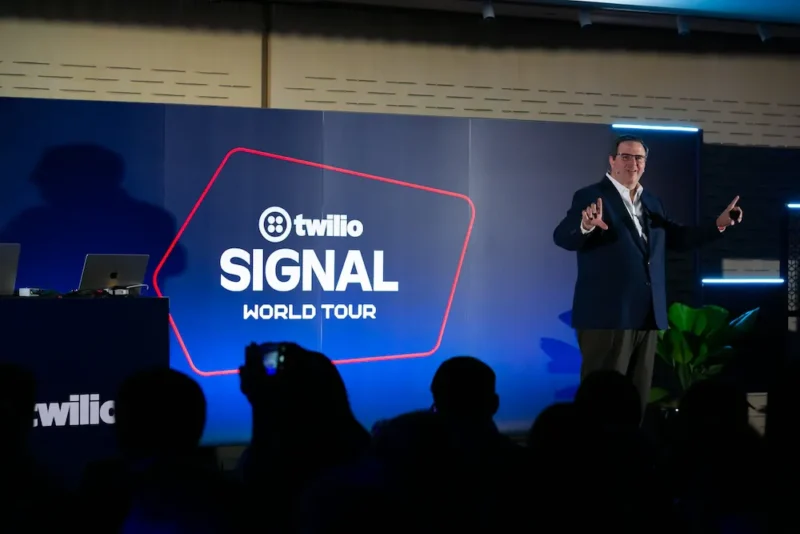
“You can’t code your way into a telecommunications agreement across 4,000 providers. You can’t fake the reliability of powering billions of transactions at critical moments every day,” Twilio’s chief operating officer, Thomas Wyatt said, framing Twilio’s infrastructure as physical, regulated, operational – not just software.
The conversation layer
The keynote made one thing clear – adding AI to broken systems won’t fix them.
“The conversation gap”- the distance between what customers expect (seamless, personalised, ongoing conversations) and what they usually get (fragmented, repetitive interactions across disjointed systems) – came up often during the keynote.
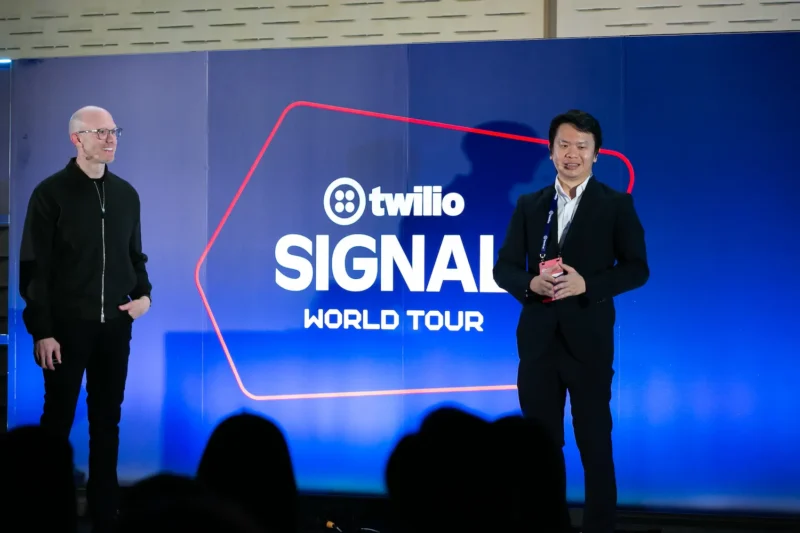
“You explained yourself. Maybe your call got transferred. You explained yourself again. You switched channels. You explained yourself a third time. You’ve been a loyal customer for years, and yet every single time you were treated like a stranger,” said Steven Follis, senior principal product manager at Twilio.
“You went from one broken experience to five faster, more confident broken experiences. This is not an AI problem; it’s an infrastructure problem.”
His warning is that simply adding AI agents into this mess risks making things worse.
Twilio’s answer is what it calls a “conversation layer” on top of its channels and data. This layer consists of a conversation orchestrator, conversation memory, conversation intelligence, and the Agent Connect toolkit to plug in the AI model of their choice.
The goal is one ongoing conversation, even as customers move from messaging to voice, from AI to human agents, and across borders.
“We need to stop stitching and start building conversations,” Steven said. “A conversation needs three things: coordination, memory, and intelligence.”
Twilio’s conversational layer is complemented by Twilio Segment and Enterprise Knowledge, which add customer and business context to interactions. Segment provides unified, real-time customer data, while Enterprise Knowledge connects agents to trusted company policies, knowledge bases and product documentation.
Turning reactive care into continuous care
Nowhere is the idea of continuous, contextual infrastructure more critical than in healthcare.
For patients with chronic conditions, care cannot end when they leave the clinic, and Singapore’s National University Health System (NUHS) built a chronic disease management initiative to address the 364 days in between the patient’s scheduled visits.
Using an AI-powered platform integrated with WhatsApp, patients can send daily or weekly readings like blood pressure, heart rate, and blood sugar. Those data flow straight into electronic medical records, allowing clinicians to monitor trends and intervene proactively.
Dr. Yong Chu Lip from NUHS, shared significant results – among hypertension patients with poor blood pressure control, the worst group rose from 25-percent to 50-percent after a year on the platform.
Like Twilio, Grab is a builders’ company.
Paul Eric Licari
This is just one of many positive examples that more patients can be managed in the community, and with secure, compliant communications infrastructure.
Build versus Buy
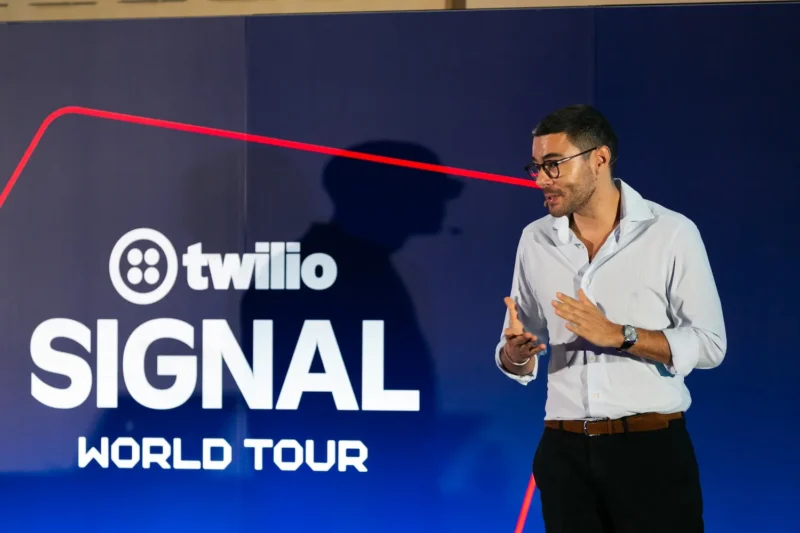
Grab’s regional head, Paul Eric Licari described the company’s challenge as mirroring Twilio’s – operating in a region with 600+ million people and around 1,200 languages, Grab and Twlio face extreme local diversity layered on top of regional scale.
Twilio’s communications infrastructure give companies like Grab the channels and context they need to deploy AI assistants to the edge – into the hands of small merchants and everyday consumers, in their language and preferred channels.
On the build-versus-buy question, Licari said, “Like Twilio, Grab is a builders’ company. We like to build… but when we partner, we’re looking at specialists that are able to help us scale, understand the market complexities… and sometimes partnering allows our engineering team to focus on things that make us very different.”