


In collaboration with Ipsos Türkiye, MARS has conducted the country’s inaugural neobanking study, shining a spotlight on how the digital transformation is reshaping both the financial world and everyday life in Türkiye.
The nation-representative survey, carried out across 12 regions with 750 participants, delivered a host of important data and insights—ranging from mobile banking usage and trust perceptions to product preferences and neobanking awareness. The study also revealed marked differences across age groups.
Digital banking usage reaches 89%
According to the research, 9 out of 10 individuals within the defined target group conduct their financial transactions primarily via mobile or internet banking. Digital platforms have become not just a race against time but central solutions where users seek trust, speed and cost advantages—superseding branches and call centres.
Among active banking users, 89% favoured digital banking, while traditional branches (8%) and call centres (3%) ranked much lower. The 35–44 age group led digital banking usage with a rate of 93%.
The concept of neobanking is being embraced rapidly in Western societies; while it is not yet fully established in our market, the research underscores its strong potential. The digital investments made in recent years by traditional banks have played an important role in this readiness.
Emra Kaya
Another striking result concerns product diversity: on average participants use 4.2 different financial products or services. In major cities such as Istanbul, Ankara and Izmir combined, the average rises to 4.6. Credit cards and debit cards top the list of used products at 62%.
Use of products also increases with age and socio-economic status.
Trust remains the foremost criterion for selecting a financial institution
The study confirms that in the financial sector, trust continues to be indispensable. Among participants, the top factor in choosing a financial institution was “reliability” (18%), followed by having one’s salary account with the same institution (11%), and the bank offering discounts, campaigns or privileges (9%). For users aged 45–54, the salary-account bank is not just a payment point but also a symbol of reliability and continuity.
This segment exhibits risk-averse behaviour: for them, long-standing relationships and familiar institutions matter. For these users, predictability in interface, uninterrupted payment operations and assurance of no disruptions become priority. Young users sketch a very different profile: their expectations and financial behaviours are more dynamic. For them, speed, user-friendly applications and data security rank highest.
Indeed, for a large portion of this age group, a bank’s physical presence is no longer decisive. A seamless, fast and low-cost digital experience suffices.
The biggest complaints among users of traditional banking services were high interest rates on loans and deposits (15%), followed by various transaction fees and charges (14%). Users aged 45 and older are particularly sensitive to these financial costs, while the 18–24 group’s biggest irritant is the high rejection rates they face when applying for banking products.
We see that men, the 35–44 age group and higher socio-economic segments have higher potential for neobanking. To harness this potential effectively, awareness must be raised and trust built. Alongside trust, speed, convenience and cost-efficiency must be emphasised as key value propositions.
Beste Yildiz
Users in Istanbul, Ankara and Izmir complain more than users in other provinces about slow transactions and long waiting times. The findings show that age, region and socio-economic status influence personalised banking-experience issues.
As for financial-service needs, they vary by age group: for the 18–34 age group, rapid execution of transactions and secure protection of personal data are paramount; in contrast the over-45 age group highlights the removal of annual card fees as a key demand. For them, the recurring annual card fee remains a major source of dissatisfaction.
One in five ready to switch to a neobank
One of the study’s most noteworthy conclusions relates to the emerging “neobanking” concept. Among participants, 63% stated they had never heard of neobanks, while only 12% indicated they were informed. In other words, the concept remains unfamiliar to 6 out of 10 People.
This is clearly subject to change. After a definition of neobanking was provided, 76% of participants said this model could suit them. Interest in neobanking is especially strong among men, those in the AB socio-economic group and urban dwellers. The principal reasons for taking an interest in this new-generation banking model were practicality (48%), speed (45%) and lower transaction costs (44%). For users aged 45 and above, lower fees are a more critical decision factor.
However, a significant segment remains rooted in conventional banking. Particularly the 45–54 age group: 38% of them said they prefer to remain with their traditional bank, citing “I want to continue with my bank I’m used to.” Their lower digital-tool familiarity also slows the Transition.
Consequently, the research indicates that one in five persons is ready to completely move their main account to a neobank, and six out of ten are positively inclined toward that idea.
Women, lower socio-economic groups and users aged over 45 adopt a more cautious stance, while men and participants in the AB group are at the forefront of the transition to digital banking.
Traditional banks have prepared users for neobanks
MARS Co-Founder, Emrah Kaya, commented: “Our primary goal in conducting this research with Ipsos was to document the rapidly changing financial behaviours, user expectations and societal reception of new-generation models such as neobanking in Türkiye.
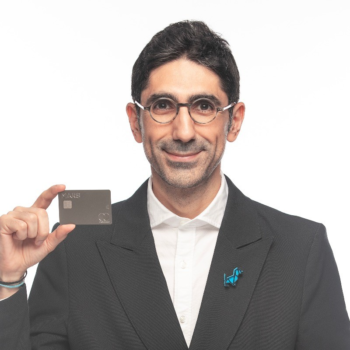
The results clearly show that digital banking is now central not only to younger users but to a wide age range of consumers. At the same time, trust continues to be a determining factor across all age groups, and we observe that traditional habits are not easily relinquished—especially among middle-aged and older users.
“The concept of neobanking is being embraced rapidly in Western societies; while it is not yet fully established in our market, the research underscores its strong potential. The digital investments made in recent years by traditional banks have played an important role in this readiness.
“Through mobile apps and internet branches, users have become accustomed to digital finance—this has paved the way for models operating fully online. In other words, the digitalisation efforts of traditional banks have prepared customers for neobanks. Today, three out of four people view this model positively.

Compared with traditional banking, its appeal lies in lower fees and commissions, the ability to consolidate all services in one place, and faster, more convenient processes. For digitally literate younger users, this model goes beyond what conventional banks offer.”
Ipsos Türkiye Strategic Research Lead and Executive Board Member Beste Yıldız added, “Our study for MARS shows clearly that neobanking as a concept has not yet reached the broader public in Türkiye. Six in ten banking-service users have never heard of the term.
“On the other hand, when the model is explained, three in four adopt a positive stance—this signals a significant potential. We see that men, the 35–44 age group and higher socio-economic segments have higher potential for neobanking. To harness this potential effectively, awareness must be raised and trust built. Alongside trust, speed, convenience and cost-efficiency must be emphasised as key value propositions.”
About MARS
Founded in 2020, MARS is the pioneer neobank in Türkiye. It introduces premium and innovative solutions to the financial-services ecosystem, enabling management of all banking services through one card and one application. Recognised by Fast Company among the year’s most successful innovative companies and winner of the 2024 Mastercard PSM Awards from hundreds of brands and projects, MARS offers the country’s first Mastercard Silver-logo cards produced under an e-money licence—and incorporates technology to consolidate all cards in one platform.
For more information: www.marsneo.com
About Ipsos Türkiye
Ipsos Türkiye is a group company of Ipsos Group S.A., one of the world’s largest research firms operating in 90+ countries with more than 20,000 employees. In Türkiye, it is among the leading institutions contributing to research science, insight generation and societal understanding, ranking immediately after the national statistical institute in terms of research capacity.
(Adapted from press release)