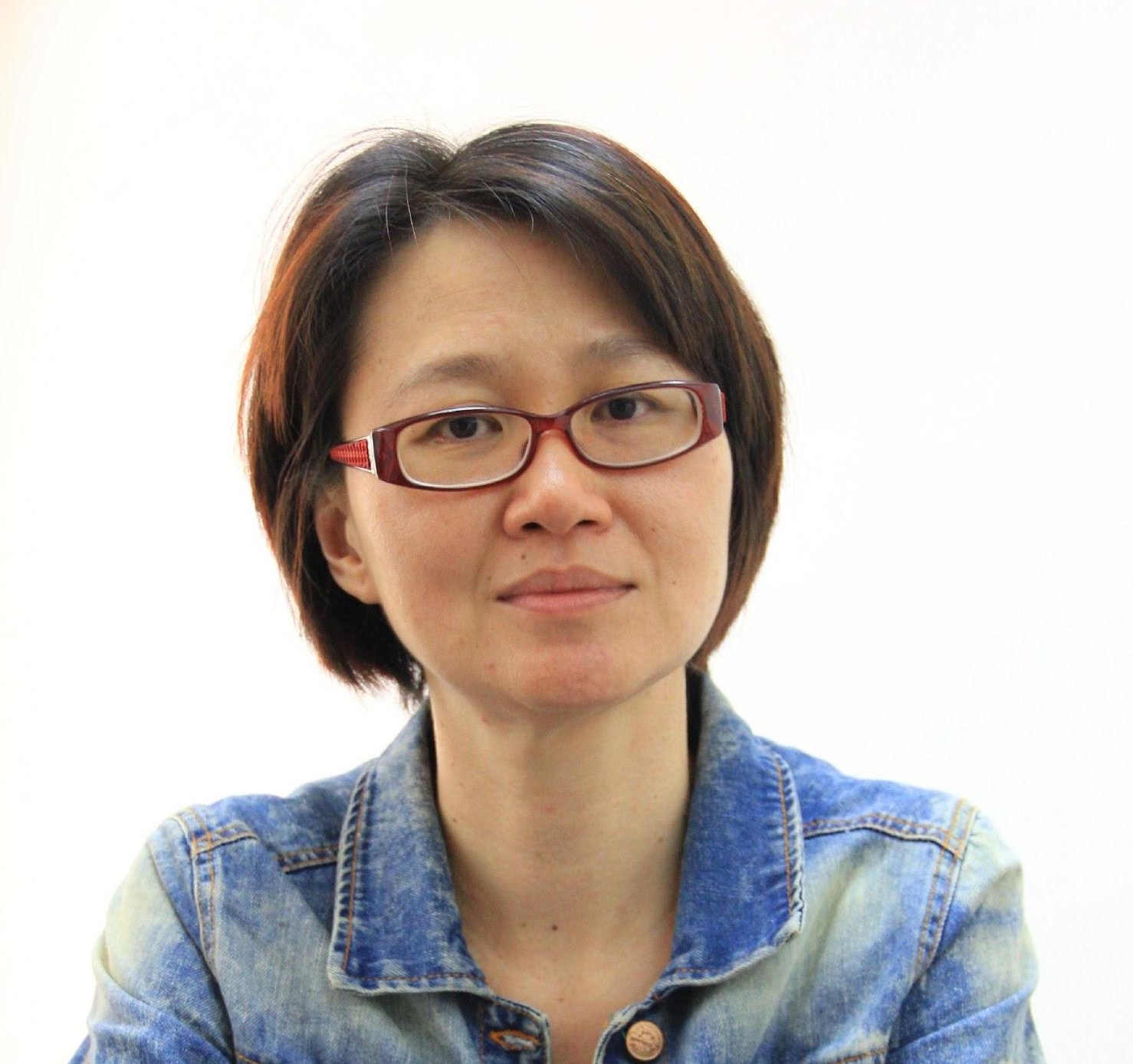
In an email interview with Shinichi Sakai, Hitachi Asia Ltd. ‘s managing director, EITN delved into the leader’s strategic priorities when it comes to accelerating his Social Innovation Business across ASEAN. He shared his top 3 strategic priorities, his views about ASEAN, and how Hitachi as a group leverages its domain expertise in different industries to tailor their approach to the realities of each market.
Significantly, the leader also talked about how the group leverages technology, specifically data and AI, and co-creates with its customers.
EITN: As Managing Director for Hitachi Asia, what are your top three strategic priorities for accelerating Hitachi’s Social Innovation Business across ASEAN over the next 2–3 years, and why those priorities?
Shinichi: Our first priority is to drive measurable outcomes through integrated IT, OT, and data to maximise its value. ASEAN customers are moving beyond experimentation and are seeking solutions that generate tangible improvements in productivity, while supporting their sustainability goals. As such, it is important to create synergy across the entire Hitachi Group to present an approach with digital at its core, that provides end-to-end capabilities for key industries such as infrastructure, manufacturing and urbanisation.
Long term success hinges on deep local understanding and a shared commitment to co-creation with all stakeholders, ensuring solutions are relevant, sustainable, and impactful.
Second, we are focused on scaling digital and AI adoption responsibly. This means helping customers modernise data foundations, operationalise AI at scale, and embed trust, security, and governance from the outset. By combining our extensive domain knowledge with AI, we further enhance digitalisation in sectors such as energy, transport, water, healthcare, finance, data centres, and beyond.
Third, we are committed to close collaboration with governments, local partners, and communities across Southeast Asia. Long term success hinges on deep local understanding and a shared commitment to co-creation with all stakeholders, ensuring solutions are relevant, sustainable, and impactful. Above all, our vision is to realize a harmonised society where the environment, people’s well-being, and economic growth coexist in harmony.
EITN: Having worked across India, Southeast Asia, Oceania, the Middle East and Africa; what unique characteristics of the ASEAN market most influence how you shape Hitachi Asia’s go-to-market and investment decisions?
Shinichi:The ASEAN region continues to demonstrate strong growth potential. With acombined GDP of $3.8 trillion and a population of roughly 670 million, the region is increasingly emerging as a hub for investment and technological innovation. At the same time, ASEAN’s diversity, particularly in terms of infrastructure maturity and levels of digitalisation, creates unique challenges and opportunities for businesses.
As a result, we take a cohesive yet flexible approach to our offerings. By leveraging the collective strengths of the Hitachi Group, tapping on our long-established domain knowledge in each industry, now all powered by AI, we tailor our approach to the realities of each market. This enables us to provide scalable, practical solutions that meet customer needs while creating sustainable value for both businesses and society across ASEAN.
EITN: Hitachi is investing heavily in digital transformation and AI, from Lumada to new offerings like Hitachi iQ and enterprise AI services; where do you see the most urgent data and AI adoption gaps among ASEAN enterprises today?
Shinichi: One of the most urgent data and AI adoption gaps among ASEAN enterprises is the lack of domain-specific AI that can be operationalised at scale. While interest in AI is strong, many organisations often struggle to transition beyond generic tools that are not designed to work within the realities of complex environments such as energy, transport, and manufacturing. Enterprises are seeking AI applications that are closely integrated with their environments and capable of delivering trackable outcomes in reliability, efficiency, safety, and sustainability.
As a technology provider, Hitachi has been co-creating with customers to integrate digital offerings to existing physical assets. Capturing data efficiently and analysing data to achieve operational excellence gave rise to HMAX, a suite of next-generation capabilities that brings the power of AI to social infrastructure.
We see potential for further development of HMAX in Southeast Asia with the mission of enhancing the well-being of individuals. Building on capabilities developed over the years in the water and rail sectors, we are exploring the introduction of HMAX to these industries to increase the supply of clean water and improve commuters’ experience, respectively.
EITN: When you speak with ASEAN governments and large enterprises about Social Innovation Business, what outcomes do they most want to see, beyond technology deployment and basic ROI?
Shinichi: When engaging with stakeholders, I often see a focus on outcomes that go far beyond technology deployment and basic ROI. For one, energy efficiency and sustainability are critical considerations. Organisations are increasingly committed to adopting green energy and embedding sustainable solutions, not just to meet regulatory requirements, but to drive long-term environmental and societal impact.
There is also a strong appetite for innovation through AI. Enterprises are seeking AI-driven tools that can optimise processes, enhance services, and create tangible value in their specific operational contexts. These priorities directly shape how we design and deploy our offerings across the region.
Enterprises are seeking AI-driven tools that can optimise processes, enhance services, and create tangible value in their specific operational contexts.
By aligning our expertise in domain knowledge and AI with the real needs of customers and communities, we can offer innovations that are practical, sustainable, and meaningful, helping ASEAN organisations achieve both business and societal outcomes.
EITN: Many organisations in this region run complex hybrid environments with legacy systems and cloud; how is Hitachi helping them modernise architecture without “rip and replace,” and what lessons are emerging from early projects?
Shinichi: We take a modernisation-first, not replacement-first approach. This means leveraging existing assets while progressively enhancing and evolving, through hybrid and multi-cloud architectures, data integration and microservices.
We help our customers build bridges between legacy OT systems and next-generation digital platforms, ensuring continuity while enabling innovation. This is especially important in critical sectors where downtime or disruption is not an option.
For instance, in the Philippines, Hitachi’s MIZU-LINK technology ensures clean and sufficient water supply by tracking and optimising water systems, transforming traditional water plants into smart water management facilities to progressively tackle the water challenges in the country.
In Singapore, commissioned by Singapore’s Building and Construction Authority (BCA), Hitachi has developed the Building Energy Efficiency Assessment tool to predict and improve the energy consumption of buildings. It provides unique data analytics to enable data-driven decision-making to support the implementation of energy-efficient measures in buildings.
Early projects have shown that success depends as much on change management and skills transformation as it does on technology. Organisations that align architecture modernisation with people and process transformation see faster and more sustainable outcomes.
We also learned that innovation arises not merely from fulfilling customer requests, but by uncovering underlying issues that customers may not yet have recognised and designing solutions to address them. Guided by the question, “What’s next?” we continue to drive innovation towards meaningful betterment through our spirit of continuous challenge that has endured for over 100 years.