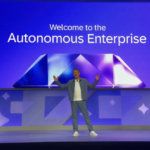
Supervity AI is an enterprise AI platform that provides “AI employees”/agents to automate and orchestrate business work, particularly processes in procurement, finance, and shared services functions. Its positioning is centred on deploying managed, human-governed AI agents rather than simply offering isolated automation tools.
Supervity’s head of growth, Ahron Menghani, said, “We’re deployed globally in about 13 countries, working with over 60 of the largest conglomerates, market leaders in every single segment from retail, to manufacturing operations, to healthcare, to government.
Ahron also described setup as being a very straightforward process where the type of operation is first identified; be it finance, auditing, accounts payable, vendor support, (or) demand forecasting… and then a proof-of-value is demonstrated within a matter of weeks. “Our timeline operations are weeks and months, not quarters.”
From chatbots to touchless processing
Supervity’s focus is on “touchless processing” – allowing AI systems to handle the bulk of operational work while humans step in mainly for exceptions and continuous improvement.
The model marks a shift from the earlier generative-AI era, when systems were largely used to answer questions, and from the single-agent tools that gained momentum in 2024 to support individual work such as scheduling and analysis.
“Where we are today is a multi-agent system that continuously learns.”
These multi‑agent systems, described as AI “employees” or “teammates,” are already deployed across 13 countries and with over 60 large conglomerates. The promise? Fast deployment and fast results.

Ahron said, “Supervity spends a lot of time on the learning mechanism.” He explained that there would be clear business context involved as a multi-agent system would be connected to, for example, ERP systems, and ingesting contracts, timesheets, invoices, and other transactional and process data.
The system watches how the business handles use cases and when exceptions occur whereby it detects patterns shifting in operations, the change is surfaced to its human colleagues, and it learns how it is resolved.
A notable example involved one of the world’s largest conglomerates where an accounts and finance team manages USD25 billion in revenue. “It is a coordinated system of employees that are processing accounts receivables (AR)… one set of AI employees was able to find USD30 million dollars of overpayments for this company.”
This enterprise had policies to enable automatic payments first, then review and audit afterward.
The mutli-agent system however, processes revenue and performs real-time audits simultaneously.
Starting where the pain – and proof – Is strongest
Madhavi Isanaka, a digital transformation expert, emphasised that enterprises are tactically choosing where to begin.

“Customers are picking areas to implement AI‑first operations in two places – it either has the biggest pain point, or it has the benefits that can be proved easily,” she said.
She added that back office operations is one place to start, especially for companies that are expanding, growing, and wanting to repurpose their people for higher value work.
But the benefits extend beyond productivity and efficiency gains. Madhavi explained, “In an accounts payable (AP) example and depending on which geographical region your VAT or GST taxes, how you claim them could help reduce the cycle which is beneficial to working capital efficiency.”
In other words, faster, more accurate handling of supplier invoices can help a company reduce the amount of cash tied up in the accounts-payable process.
Besides compressing cycles, AI agents are continuously triangulating data to surface early payment discounts, quality discounts, and other contractual benefits that manual processes might miss. They also help ensure compliance and enable fraud detection.
“Your benefits will be in several categories,” Madhavi pointed out.
Straight through and automated
An air conditioning manufacturer in Malaysia, Daikin, used AI teammates to overhaul back office operations. Before deployment, only 39-percent of incoming work was processed straight through without humans reworking. Sixty-one percent of work still had to be manually redone across functions like accounts payable and accounts receivable,
“We instituted a set of teammates that understood the business at the core level… and then took that straight through processing rate from 39-percent to 75-percent in under two months,”
The reported improvement freed teams to focus on higher-value activities while supporting business growth, he added.
The larger implication is that enterprise AI is increasingly being judged not by its ability to generate responses, but by whether it can reliably execute business processes, detect exceptions in real time and produce measurable operational outcomes.