In an interview about regional trends and product strategy, Baz Kuper, SVP and APAC MD at Siemens Digital Industries Software described Asia as a landscape of uneven industrial digitalisation growth – China and Japan at the high end, and Southeast Asian countries like Malaysia and Vietnam advancing at different speeds. “If you look at Vietnam or Thailand, there’s still more on the manufacturing side. Malaysia … maybe one of the front runners that are moving up the value chain (towards design).”
That progression helps explain why Siemens says it sees accelerated demand for end-to-end lifecycle and manufacturing solutions across APAC. The company’s message: connecting EDA (electronic design automation), PLM (product lifecycle management) and manufacturing data creates far more value – especially when paired with AI – than isolated point solutions and siloed data.
“For us, building that most holistic digital twin is being the differentiator. The breadth of our portfolio but also our depth… is unique in the market,” he said.
A central theme in the interview was that Siemens can deliver that integrated “digital twin” across the whole product lifecycle, a capability that is now paying off in large customer wins.
Why are enterprises switching?
Baz highlighted a major contract with HD Hyundai, the world’s largest shipbuilding group as a significant example. “They literally bought everything we have from the design tools NX to Teamcenter to our digital manufacturing tools to Mendix … and the key there is that the current tools that they use, they separate design and manufacturing.” With Siemens, he said, they now have a unified system that “shortens their time to market and lowers their cost.”
“(Customers) feel that this connection between design and manufacturing becomes extremely relevant to them, and we are one of the only providers that can build them the end-to-end solution.”
Baz Kuper
Baz observed that in the past, the selection of a solution was usually made during the design phase, but the trend now is that manufacturing drives this.
Siemens is winning over major customers like HD Hyundai from competitors, and it seems to be because of execution and integration, more than shiny features. “It’s not just selling; it is successfully implementing and going live,” Baz said. “Customers start to realise that … they were promised a lot, but at the end of the day … when it came to delivery, that didn’t match what they thought.”
Digital threads and data lakes
AI and data strategy have emerged as key differentiators, Baz suggested. He warned that throwing engineering data into generic data lakes “miss[es] out on AI interpreting critical relationships, context and governance. Engineering data is so dynamic that a data lake is “basically taking a snapshot… [that is] already outdated” by the time you look at it.”
Siemens is “doing data lakes in a way that others are struggling with.”
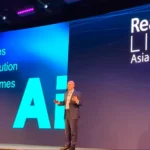
Tony Hemmelgarn, Siemens DISW CEO
Instead, Siemens is promoting a governed, ontology‑driven semantic layer approach to make engineering data usable for AI. Knowledge graphs make relationships between engineering entities explicit, while ontologies define the shared vocabulary and rules that give those relationships consistent meaning.
According to Siemens, its technology can help automate ontology creation and make connected engineering data more usable for AI.
Baz said, “We have a digital thread already in our systems. So, why would you throw that in a data lake? You want AI… to go into your systems and use the pre-defined ontology that we already have.”
In an earlier briefing, Tony Hemmelgarn, president and CEO of Siemens Digital Software Industries, had also shared about receiving customer feedback that Siemens is “doing data lakes in a way that others are struggling with.”
The most holistic
The executive also argued the company’s breadth – built through acquisitions such as Mentor Graphics and Foran – sets Siemens apart from specialist rivals.
“We have done USD25 billion worth of acquisitions. We’ve done some unique things. We bought Mentor Graphics, an EDA company. Nobody has done this,” Baz said, pointing out that Siemens’ manufacturing, PLM, and EDA software capabilities are difficult for competitors to replicate to the full extent.
What’s next
Speaking on the sidelines of Siemens’ customer conference in Bengaluru, Baz told EITN that the response has been “extremely positive”, with some customers surprised by how far the company had already progressed.
Beyond the product demonstrations, he said the event had underscored a growing recognition that the digital thread is becoming fundamental to engineering and industrial transformation. It can also sharpen buyers’ understanding of the longer-term strategic choices ahead, he added.
“These decisions are made for the next 10, 20 years,” Baz said. “It’s a very impactful decision, and once you go in, it’s hard to go back.”
He also indicated that Siemens is not done with its streak of positive and significant announcements.