Motorola Solutions is pushing beyond its roots to become a full‑stack safety and security technology provider across Asia, the Middle East, and Africa (AMEA), reshaping how governments and enterprises think about their mission‑critical infrastructure.
Today, its legacy is extending into software, AI, video, and defence technologies, as the organisation positions itself to address the region’s rapidly growing critical infrastructure landscape.
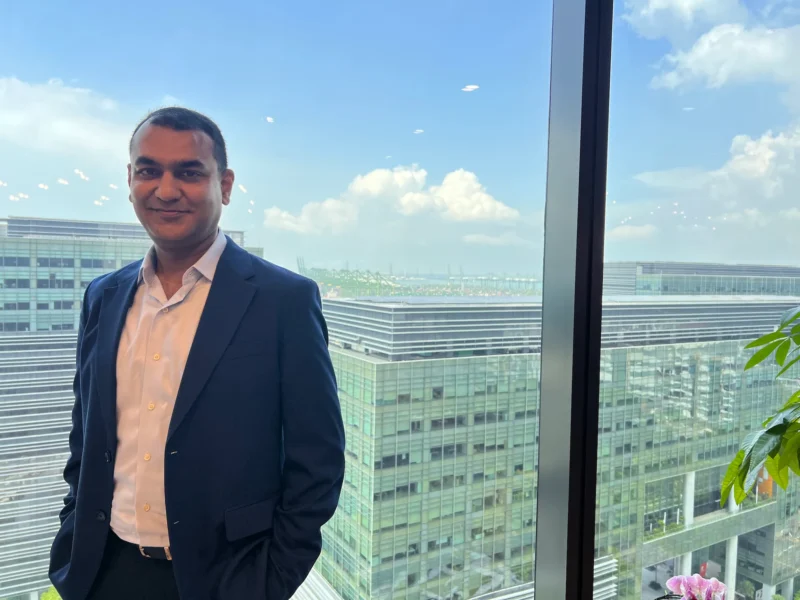
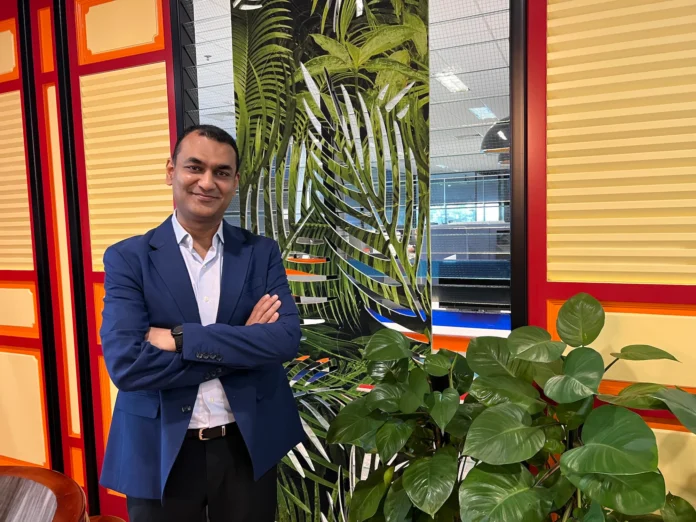
Rajat Gupta, vice president overseeing Motorola Solutions in AMEA – a massive region comprising 75- to 80-percent of the world’s population – said demand across defence, public safety, transport, and critical industries is shifting decisively away from point solutions toward integrated platforms. He also noted rail and metro customers were among the first movers.
Transport, energy and mining drive mission‑critical demand
Building stronger transportation links to serve AMEA’s booming population and better connect regional centres is driving upgrades for rail and airport infrastructure. In rail, Motorola Solutions’ focus is on securing long‑term extensions with existing customers like Singapore’s SBS Transit, which has committed to extending a maintenance and support contract for its TETRA communications system until the late 2030s.

Meanwhile, the company is securing new metro projects in fast‑urbanising markets such as India and Southeast Asia which seek to combine critical communications with video and command‑and‑control solutions.
Airports across the region are planning over USD200 billion in infrastructure investments, driven by post‑pandemic rebounds in passenger traffic, rising air cargo volumes and the strategic importance of regional hubs.
Rajat pointed to “growing demand… for AI‑powered video security, [and] robust comms to connect different airports across mission‑critical voice and broadband platforms,” noting that Narita International Airport already use Motorola Solutions’ TETRA and broadband push-to-talk WAVE PTX services “to provide vital communications and connect emergency services when disasters strike.”
The region’s oil, gas and mining sectors also rely on integrated safety solutions to manage protection of physical assets in remote locations. In these potentially explosive environments, ATEX‑certified communication devices are needed while AI‑enabled video security systems maintain constant oversight of vast assets and perimeters, providing protection and monitoring for critical infrastructure such as exposed branch pipeline systems. Combined with long‑range thermal cameras such as those from Silent Sentinel, operators can detect potential issues like tampering or theft, create automated alerts and coordinate quicker responses.
The future is hybrid, with radio at the core
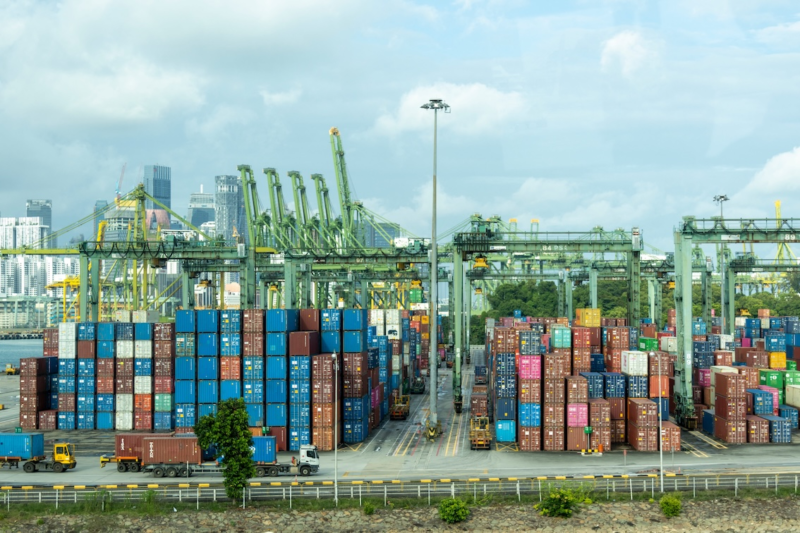
LMR networks continue to anchor Motorola Solutions’ business, but proven technologies are effective solutions as well. Public safety agencies like those under Singapore’s Home Team and the Singapore Port Authority depend heavily on those critical systems, with the port authority making more than half a million push-to-talk calls every day. Rajat also added, “If you look at governments across the region, to start with – Malaysia, Korea, Vietnam – all of them are using these communication networks at some level or the other.”
Motorola Solutions’ latest offerings in mission-critical communications blend both LMR and broadband to create hybrid network architectures. DIMETRA Connect, aimed at TETRA radio customers, “bridges” LMR and broadband, enabling continuous voice, data and video while users move seamlessly between networks.
The solution extends mission‑critical communications into challenging environments such as underground metro tunnels and to cross‑border missions where coordination across multiple response agencies is essential.
“LMR remains our bread and butter, but with Silvus, we’re extending the reach of voice and data networks to places they have never been before.”
Rajat Gupta
Meanwhile, the broadband-based WAVE PTX spans diverse environments and technologies. It transmits interoperable voice, video and data across P25 ASTRO, TETRA, DMR and broadband networks, and is being adopted both as a standalone solution and alongside DIMETRA Connect.
At Japan’s Narita Airport and other major hubs in the region, WAVE PTX connects emergency services, operations teams and security staff, particularly during major incidents and natural disasters such as Typhoon Number 15.
AI‑driven and infrastructure‑less – the stack expands
In essence, the company has built a broader tech stack around its radio core through targeted acquisitions and organic R&D.
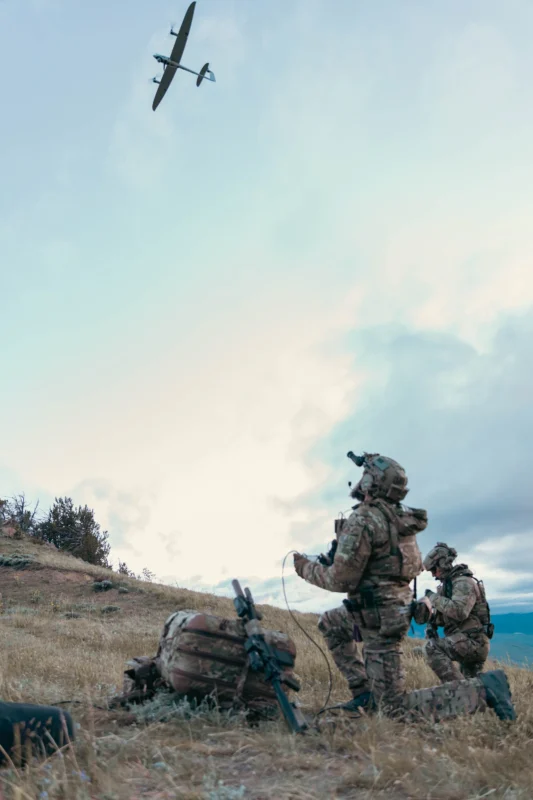
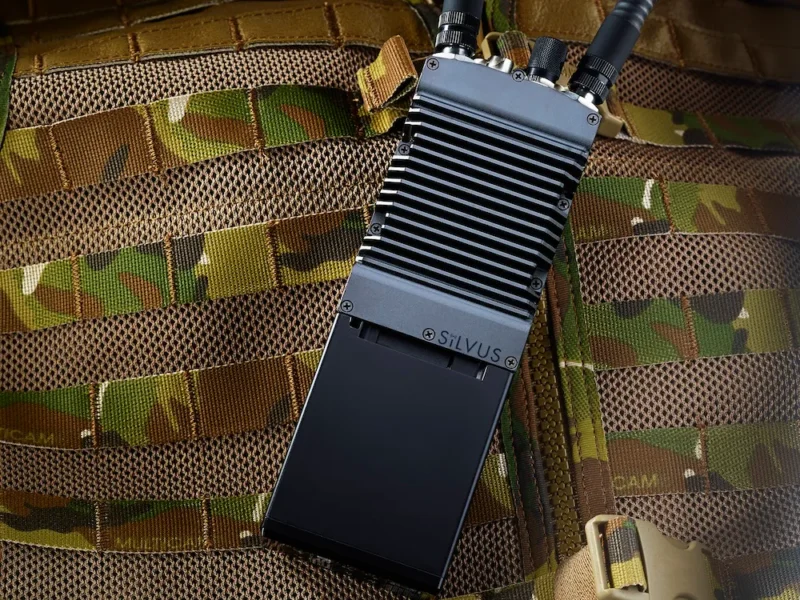
Silvus Technologies is Motorola Solution’s USD4 billion acquisition that offers highly secure mobile ad hoc networking (MANET); it operates without fixed infrastructure, using meshing nodes and self‑healing networks to maintain connectivity. These networks are designed to support drones, sensors and high‑bandwidth video feeds in contested and remote environments.
“With drones becoming increasingly important for both public safety and defence operations, we’re seeing steady demand for ways to connect and control them with resilient networking that works in places that lack traditional infrastructure,” Rajat said, adding that the acquisition has bolstered the company’s portfolio of defence-grade solutions.
“LMR remains our bread and butter, but with Silvus, we’re extending the reach of voice and data networks to places they have never been before. Our customers’ needs are evolving and they need reliable communication links to work effectively together.
“That’s what Silvus brings.”
Looking into the second half of 2026 and beyond, Rajat sees clear trends across AMEA: growing demand for infrastructure‑less communications; greater unification of platforms that connect agencies across borders and LMR and broadband networks; an abundance of fixed and mobile video footage feeding into command centres; and AI at the core of incident management, finding actionable data while filtering out the noise, reducing false alarms, and just helping busy, resource‑constrained people to do their jobs better.
To find out more, watch the full podcast here.