By Aaqib Alavy, Tech and AI Lead, Acumen Intelligence
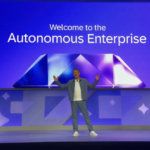
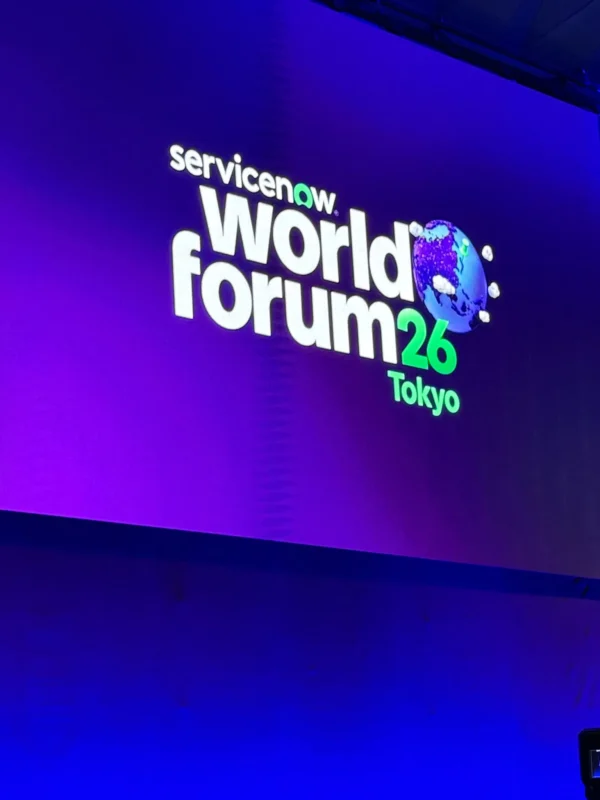
ServiceNow leveraged its World Forum keynote in Tokyo to outline a vision for enterprise AI built around four capabilities: sense, decide, act and secure, bringing together AI assistants, autonomous workflows and governance across its platform.
The company, which said it works with 90-percent of the Fortune 500, demonstrated how AI agents could handle tasks spanning IT support, employee services, sales and security.
Alongside demonstrations and case studies from Chubu Electric, CVS Health, and NFP (an AON company), it emphasised the need for organisations to understand what their AI systems are doing, what information they can access and whether they are delivering measurable value.
The central message was that autonomy needs to be accompanied by business context, visibility and control.
Bringing AI assistants into everyday work
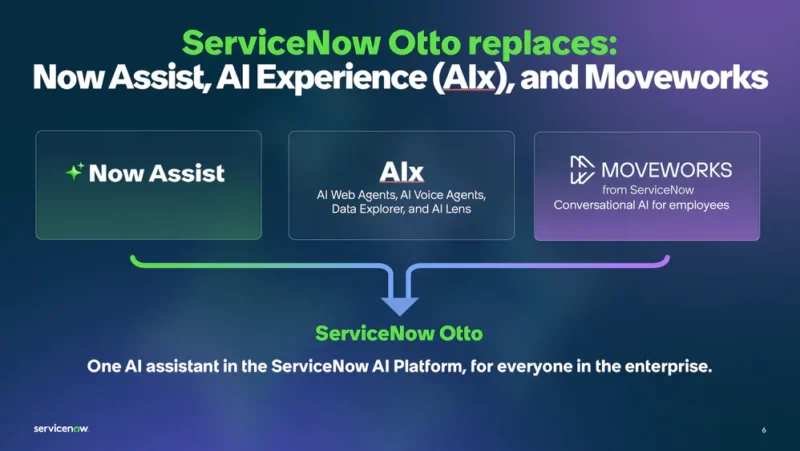
ServiceNow Japan’s President, Masatoshi Suzuki, introduced ServiceNow Otto, an AI assistant for activities such as onboarding employees, managing access, routing IT incidents and handling employee requests, including time off.
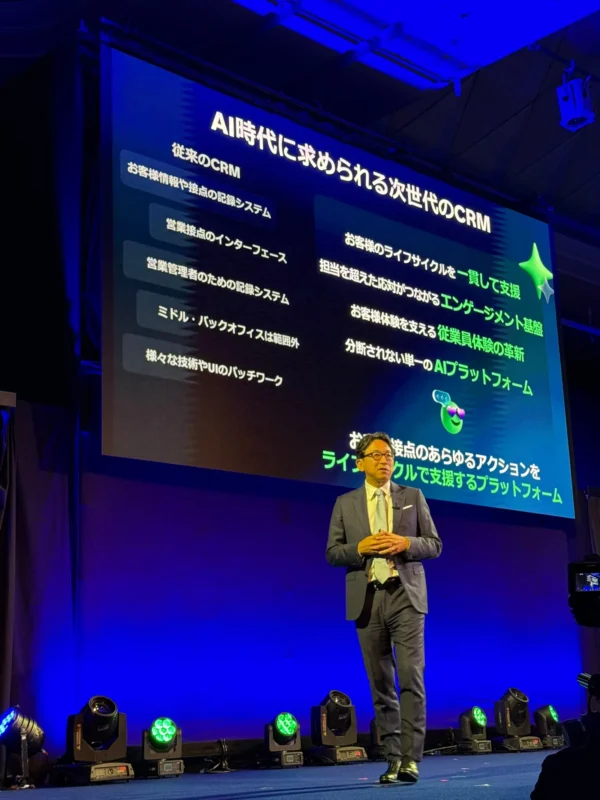
The keynote positioned these capabilities as part of a broader move towards AI-powered conversational interfaces that can gather information and execute workflows across enterprise systems.
Its EmployeeWorks demonstration applied that approach to HR and administrative processes. A parental leave scenario showed how an assistant could help manage employee requirements, while other examples covered benefits and reminders about employee information.
In a customer example presented during the keynote, ServiceNow said CVS Health had saved thousands of hours through AI-powered conversations that helped resolve employee issues and tickets.
Measuring and governing AI
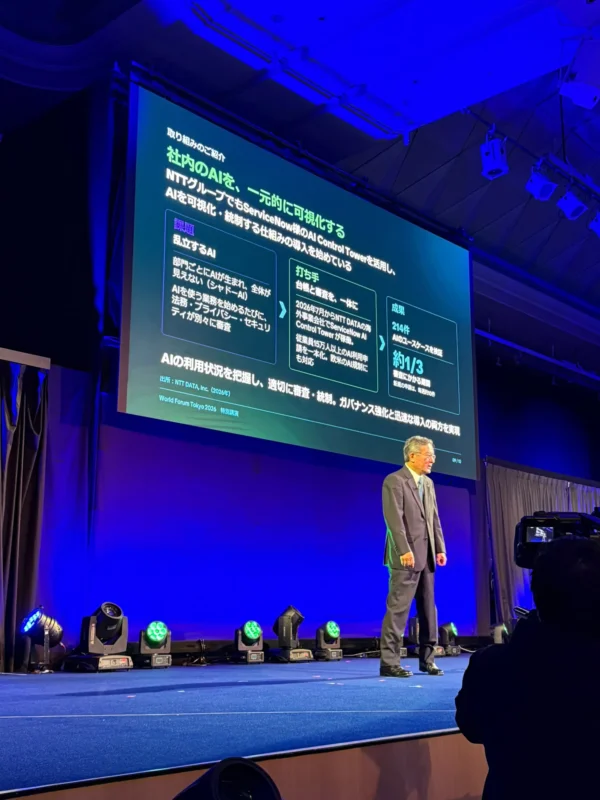
ServiceNow’s AI Control Tower was featured as the means of overseeing AI deployed across the company and third-party environments.
The company described capabilities for discovering AI assets, including models and datasets, managing intake and risk assessments, and governing their use against regulatory and organisational requirements. It also highlighted detection of issues such as hallucinations, prompt injection and data leakage.
The AI Control Tower was also shown tracking AI consumption, including token usage to help organisations assess ROI on individual AI assets.
In one demonstration, Otto was asked to identify the highest-impact agent from those running in an environment. It selected a global policy agent associated with an estimated saving of 800 working hours a year.
The demonstration also exposed session-level quality and safety scores, execution traces and the steps taken by an AI system. Risk classifications and responses were presented alongside policy frameworks, while dashboards brought together cost, performance and time-saving metrics.
The emphasis was on making AI agent activity auditable, rather than treating successful task completion as sufficient.
Connecting alerts to business context
ServiceNow also presented its Context Engine, which it described as linking business knowledge through knowledge graphs. That connected information included policies, employees and assets, providing context for AI-driven decisions and actions.
The emphasis was on making AI agent activity auditable, rather than treating successful task completion as sufficient.
NFP illustrated how adding business context to IT alerts could accelerate incident resolution. According to the keynote, its IT service desk previously received alerts without adequate visibility into the work affected by the underlying issue.
ServiceNow said providing context alongside those alerts helped NFP achieve 97-percent faster issue resolution.
The relationship between context and action was also featured in its CRM demonstrations. A Panasonic Avionics case study described fragmented sales, service, marketing and billing processes that required manual work.
ServiceNow presented its CRM platform as a way to connect those departments. An update to a sales opportunity triggered a notification to a representative and supported the creation of a related quote, linking sales and service activity within the same platform.
Keeping operational expertise in the loop
Chubu Electric Power Co., described an environment supporting more than 20,000 users and over 400 systems, using ServiceNow NowAssist alongside its vulnerability response (VR) capabilities.
Its service desk included an AI chatbot to help staff discuss and handle security issues, while vulnerability workflows supported triage and ticket creation. ServiceNow attributed a 25-percent reduction in overall IT issues.
The main observation is that the solution helps to develop and improve AI rather than simply replacing operations staff. Employees’ knowledge of real-world problems allowed them to finetune and ‘nurture’ responses, gradually turning their operational experience into reusable digital knowledge.
Security and visibility
ServiceNow demonstrated its Autonomous Security Platform alongside Control Tower, showing a dashboard of AI usage and risks such as prompt injection and agents moving from their assigned roles.
The demonstration also covered network-connected devices, their classifications and potential attacker entry points, with risk scores used to prioritise attention.
The platform identified the exposure by vulnerabilities, surface personnel to collaborate on remediation and support the creation and assignment of response.
Shadow AI was another focus. ServiceNow showed how visibility into AI traffic could help organisations detect services introduced by employees outside established oversight processes.
Are we ready for AI and autonomous workflows?
Explainable AI, understanding how AI agents make decisions and carry out processes, is crucial.
The conference audience were treated to examples of agents capable of researching incidents, gathering context, triaging problems and proposing resolutions. One example showed a role-based IT agent resolving a ticket without human intervention, while keeping its actions visible to users.
Across these examples, the company stressed reducing avoidable exposure, including excessive access privileges and unnecessary public settings, alongside detecting threats.
The keynote demonstrations brought also its broader message into focus: autonomous workflows depend not only on capable agents, but also on the knowledge, oversight and accountability surrounding them.