Singapore’s role as a regional technology hub received two boosts in October, with a Tokyo–Singapore startup cooperation agreement and the opening of Red Hat’s Asia Pacific AI Centre of Excellence. The announcements address different stages of technology development: helping startups expand overseas and supporting enterprises in putting AI into production.
Tokyo and Enterprise Singapore deepen startup cooperation
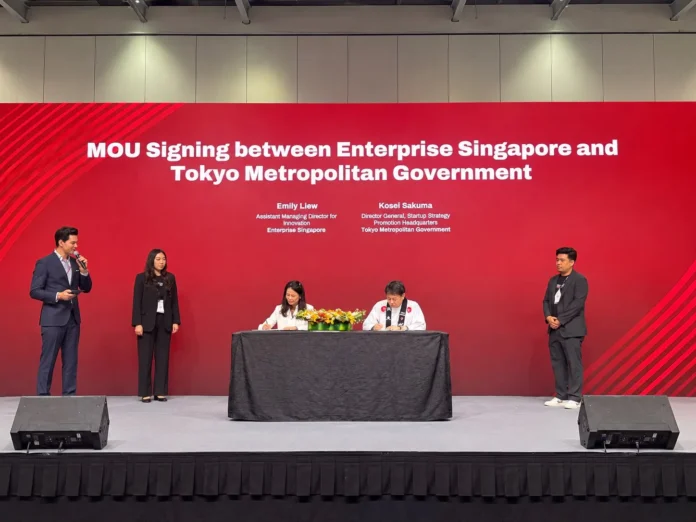
The Tokyo Metropolitan Government (TMG) signed a memorandum of understanding with Enterprise Singapore on 27 October at SWITCH 2026, the Singapore Week of Innovation & Technology.
The agreement aims to strengthen cooperation in innovation and startup development, building closer ties between Tokyo and Singapore.
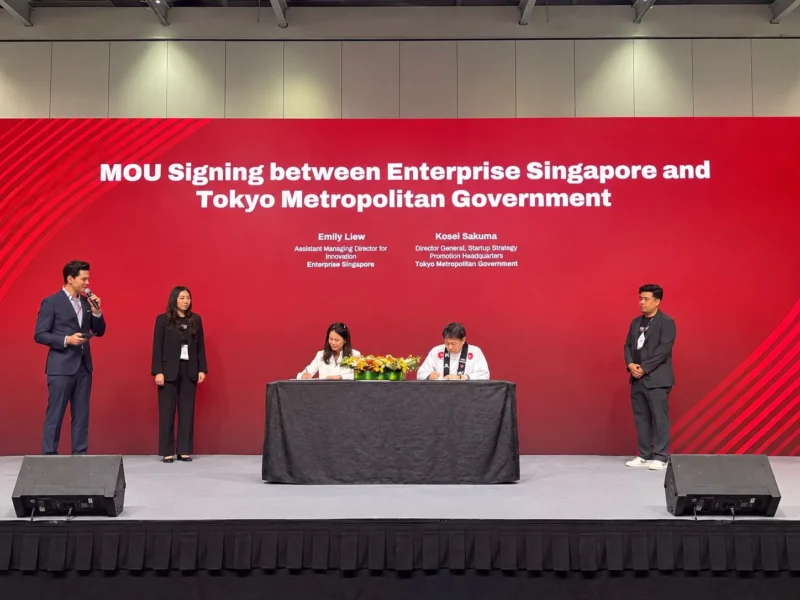
It forms part of TMG’s “Global Innovation Strategy 2.0 STARTUP & SCALEUP”, which seeks to help startups from Tokyo and across Japan grow internationally through partnerships with overseas startup support organisations.
Proposed activities include knowledge exchange, help with overseas market access, connections between startup support organisations, and joint programmes and events.
The agreement brings together Tokyo’s plans for startup expansion and Enterprise Singapore’s work in business development. The Singapore agency supports local companies’ growth and overseas expansion, while helping international businesses find Singapore partners through a network spanning more than 35 countries.
Red Hat builds regional AI engineering capabilities
Separately, Red Hat introduced its APAC AI Centre of Excellence in Singapore on 22 October, supported by the Singapore Economic Development Board.
The Centre will help organisations take AI applications from testing into production, using open-source technologies and hands-on engineering support.
Its engineering teams will develop reusable software architectures for common industry problems and contribute code to upstream open-source projects. Their work will address requirements such as system deployment, runtime performance and platform management.
The Centre includes engineers, forward-deployed engineers, architects and project managers working on AI and machine-learning deployments in customer environments. It will also help customers and partners develop skills in software engineering, automation, cloud-native development and DevSecOps.
“AI adoption is moving rapidly from experimentation towards execution, and organisations need open platforms and hands-on engineering expertise to make that transition responsibly,” said Daniel Aw, vice president and general manager, Red Hat Asia Pacific.
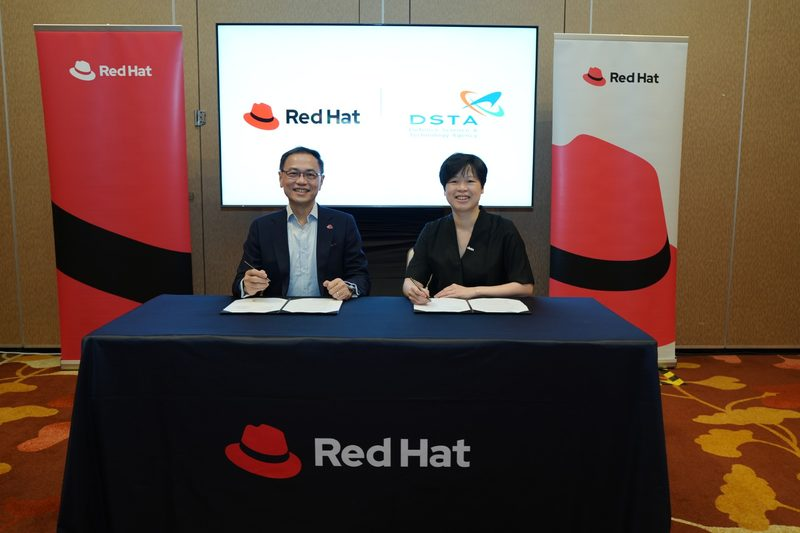
Singapore’s Defence Science and Technology Agency (DSTA) will collaborate with Red Hat to explore and co-develop AI and cloud-native solutions for defence applications.
Their work covers AI, cloud computing, application modernisation and edge computing to support operations across multiple clouds. It includes establishing DevSecOps architectures and practices, alongside Day 2 operations – the ongoing management of deployed systems – across on-premise and off-premise environments.
Red Hat said basing the team in Singapore would allow regional customers and partners to work more closely with its core product teams, helping ensure that product development reflects customer requirements.
The announcements address two practical requirements for technology businesses: reaching new markets and delivering systems that customers can use reliably. The Tokyo–Singapore agreement focuses on international connections, while Red Hat’s Centre provides engineering support and skills development. For enterprises adopting AI, that support extends beyond the initial proof of concept to deploying, maintaining and managing applications in daily use.