Join our community and be part of the conversation.
To subscribe, simply enter your email address on our website or click the subscribe button below. Don't worry, we respect your privacy and won't spam your inbox. Your information is safe with us.
DC World Asia 2026: Connecting the systems behind the data centre
Power, cooling, building controls, physical security and IT infrastructure increasingly form a single operating environment. At Data Centre World Asia 2026, held in Singapore, vendors said visibility across these systems is becoming essential for resilience, efficiency and incident response.
Data centre operators have long built redundancy into their facilities, from backup generators and uninterruptible power supply (UPS) systems to duplicate network paths and N+1 cooling. But as facilities grow in scale and complexity, redundancy alone is no longer enough. Operators also need to see what is happening across the systems that keep the site running.
The visibility challenge
At the event, conversations with Hitachi Vantara, Honeywell Technologies and Nozomi Networks kept coming back to one theme: connecting systems that have traditionally been managed separately.
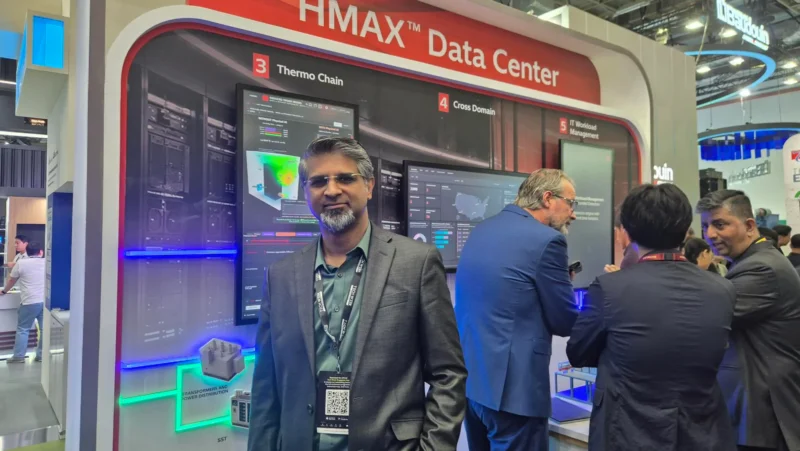
Simon Ninan, Senior Vice President of Business Strategy at Hitachi Vantara, said parts of the data centre ecosystem still operate in silos. Facilities teams manage power, cooling and the building itself, while IT teams focus on compute, storage, networks and data. Yet each depends on the other.
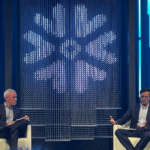
Simon Ninan, SVP, Business Strategy at Hitachi Vantara
“AI is changing requirements through the stack. We need more power, more cooling and different architectures to make this all work together,” Simon said. “If, for example, your workload goes up in IT, here’s the power impact. Or if there’s a power event or stress on the grid, here’s what you need to do for data.”
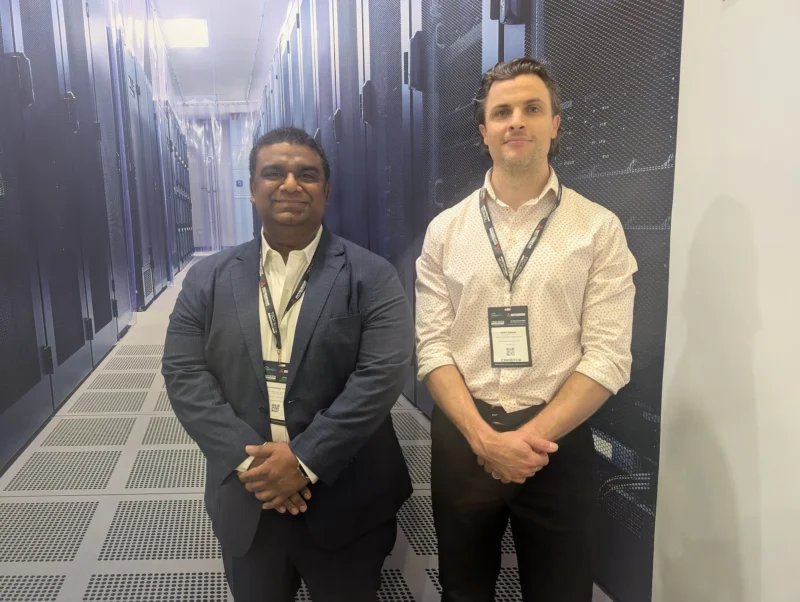
Honeywell Technologies made a similar case from the building and industrial controls side. Instead of generating more isolated alarms, systems need to give operators context. That means connecting data from power, cooling, building management, security and other operational systems, then presenting it in a usable form.
Honeywell Technologies (L-R): Adhishesh Sood, Senior Director Data Centre Technologies Rhys Crabb, Director of Offering & Product Management
The goal is not to replace existing platforms but to create a common view of the ones already in the facility. This matters most for operators managing multiple sites, equipment from different vendors and varying operating conditions.
Extending cybersecurity into OT
Cybersecurity is part of that picture. Data centre security has traditionally focused on servers, networks and applications, but the infrastructure supporting them needs monitoring too.
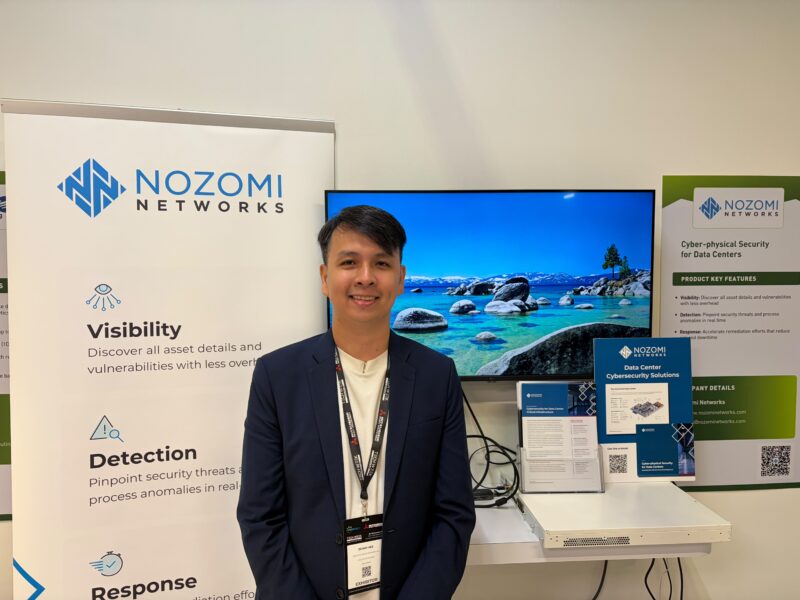
“In a data centre, we monitor what we call operational technology,” said Denny Hee, Associate Sales Engineer APJ at Nozomi Networks. “These could be your cooling system, electrical power, physical access control, building management system, or even things like your CCTV. These are the things that keep the lights on.”
The risk goes beyond system failure. An unauthorised configuration change, a vulnerable device, or an unusual network connection can also affect a critical asset. A temperature set point might change because of maintenance, equipment malfunction, operator error, or malicious action. Without a clear baseline of normal system behaviour and the assets involved, finding the cause quickly can be difficult.
A shared operational picture
As data centres expand and operations become more distributed, operators need a shared view of workloads, power consumption, cooling demand, facility capacity, equipment health and cyber events. That does not mean merging facilities, IT and security into one function. It means giving each team enough context to see how a problem in one system could affect another, and to assess an alarm before it becomes a service disruption.
The payoff is faster diagnosis, clearer prioritisation and better-informed decisions on maintenance and investment. But technology is only part of the answer. Speakers also pointed to a shortage of experienced data centre staff. That makes it just as important to develop people who understand both their own specialist systems and the wider operating environment.