By Charles F Moreira
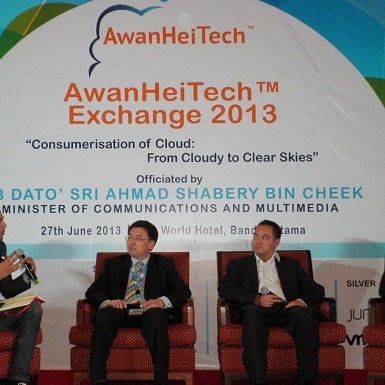
“My analyst team predicted about eight months back that cloud uptake in Malaysia will be lethargic in 2013, but also that market perception of the ‘new normal’ will provide the building blocks for enterprise adoption,” Dan Fadalini Sukia, IDC Malaysia, Senior Market Analyst told the AwanHeitech Exchange 2013 conference and exhibition at the One World Hotel in Petaling Jaya on 27 June.
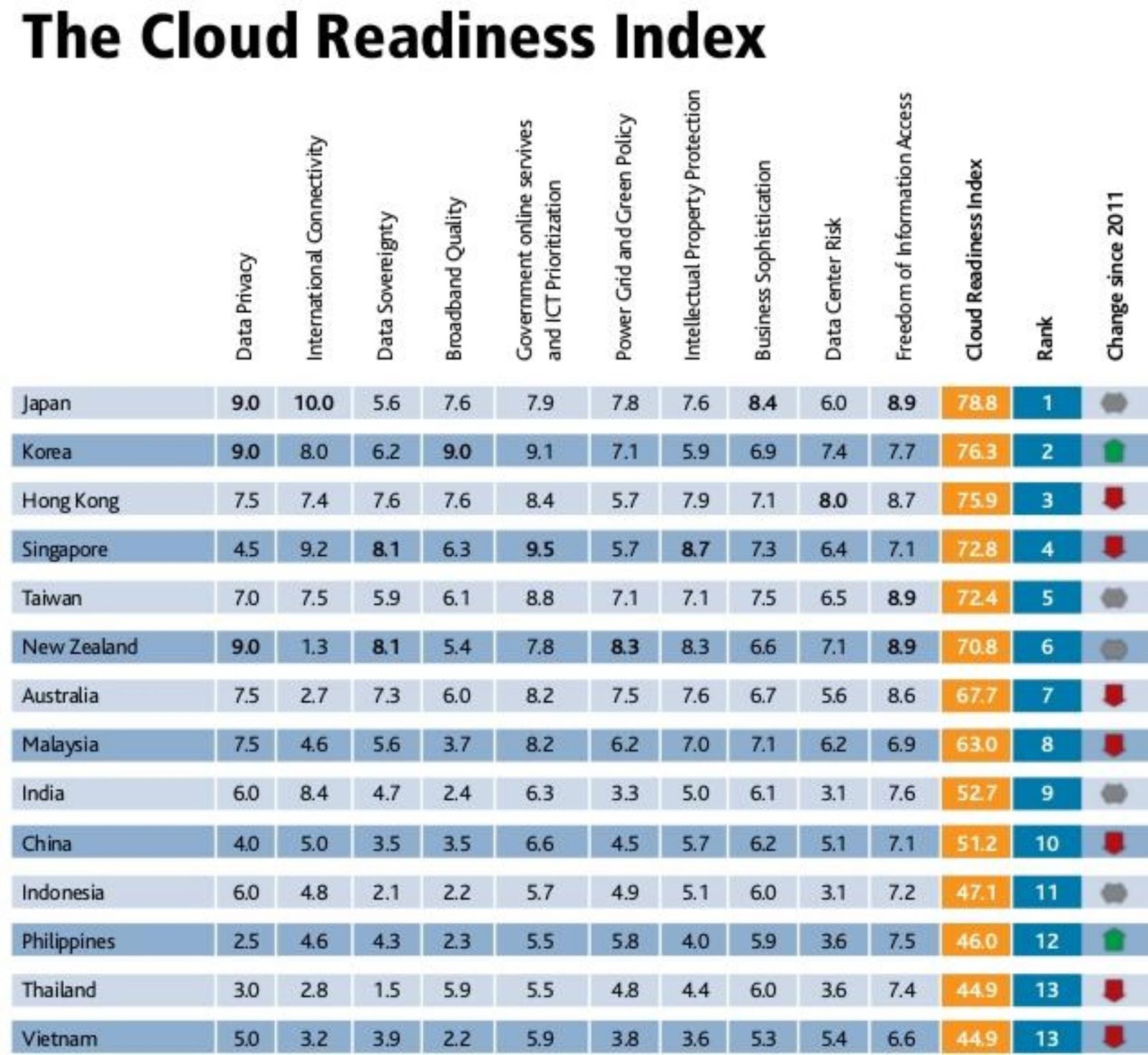
“That’s due to a terrible lack of cloud knowledge according to industry feedback and some cloud service providers who are pushing cloud technology,” said Dan. “According to the Asia Cloud Computing Association’s Cloud Readiness Index of October 2012, Malaysia’s cloud readiness ranking fell to 8th from 7th position in 2011, and Singapore was ranked 4th,” he added.
 |
| Dan Fadalini Sukia |
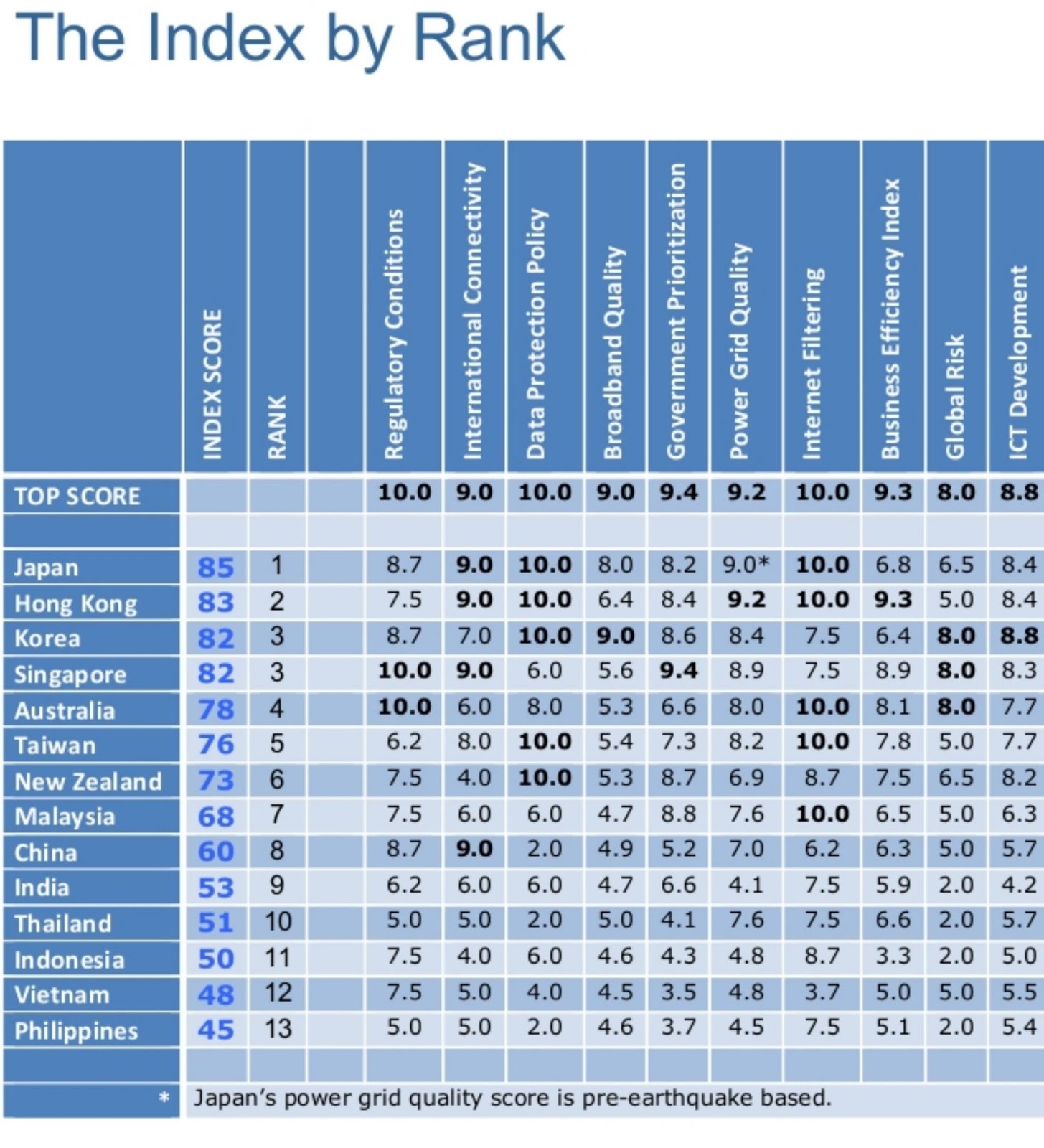
We downloaded the 2012 and 2011 reports and Malaysia scored 63.0 in the October 2012 index from 68.0 in 2011. The report opined, “Malaysia maintained its position in the middle tier of the Index. While it made progress in some areas, such as its nationwide Cloud On-boarding Programme for SMEs, it ranked well behind the leaders in broadband and international connectivity, despite achieving the targeted penetration rate set in the National Broadband Initiative and extending regional connectivity with new cables to Indonesia and Japan.”
The report recommends, “Malaysia’s priorities should be in IP (intellectual property) protection and data centre risk, both areas where it scored poorly. It also needs to introduce the Personal Data Protection Act 2010 (PDPA 2010), which has not yet been brought into force.” Well, the PDPA 2010 was enforced effective 1 January 2013.
 |
| Asia Cloud Computing Association Cloud Readiness Index 2012 |
Singapore scored 72.8 2012 and had dropped to 4th rank from 3rd in 2011 when it scored 82.0. The 2012 report opined, “Singapore topped the Index in e-government and ICT prioritisation, and in IP protection. Infrastructure development has long been viewed as an enabler of the knowledge economy, and it is no wonder that we see Singapore ranking 2nd in international connectivity and 4th in broadband quality. The only shortcomings seem to be in the areas of data privacy and power grid/green policy.
The report recommended, “Since the completion of this Index, the Singapore Parliament has passed the Personal Data Protection Act, removing one of the significant shortcomings in Singapore’s cloud policy regime. Despite this development, the law will only come into effect in 2014, and we would urge the government of Singapore to accelerate its implementation.”
The 2012 index scored each country by 10 criteria on a scale of 1 to 10 each, then added up the 10 scores and rounded the sum to an integer (whole number).
The 2012 criteria are Data Privacy, International Connectivity, Data Sovereignty, Broadband Quality, Government Online Services and ICT Prioritisation, Power Grid and Green Policy, Intellectual Property Protection, Business Sophistication, Data Centre Risk, and Freedom of Information Access. Methodologies used to rank each criteria varied but in general were based upon figures in various reports and various survey results.
However the 2012 and 2011 rankings are not quite an apples to apples comparison since the criteria used in both years differed. The 10 criteria in the 2011 report are Regulatory Conditions, International Connectivity, Data Protection Policy, Broadband Quality, Government Prioritisation, Power Grid Quality, Internet Filtering, Business Efficiency Index, Global Risk, and ICT Development.
 |
| Asia Cloud Computing Association Cloud Readiness Index 2011 |
The 2011 index had two information regulation criteria – namely, Data Protection Policy and Internet Filtering, which was expanded into four criteria in the 2012 index – namely, Intellectual Property Protection, Freedom of Access to Information, Data Sovereignty, and Data Privacy, based upon feedback from stakeholders, whilst some of the criteria in 2011 were combined to maintain 10 criteria in 2012.
“The Malaysian market is not naturally adjusted for most forms of externally sourced (outsourced) services and the use of cloud message is not yet mainstream and I see it as only being a matter of discussion or conversation starting by next year. There are also uncertainty about legislation regarding data governance (the PDPA 2010) and lack of a proper cloud framework,” said Dan.
The uncertainty over PDPA 2010 was over how it would affect organisations’ intentions to adopt cloud. Malaysian companies also have a strong ‘wait and see’ attitude. Malaysia also has a somewhat inconsistent infrastructure which is good in metropolitan areas only. There’s also a huge shortage of talent in cloud technology and Dan also believes that anticipation over the May 2013 general elections contributed to delay in cloud adoption.
Different outcomes
Dan’s prediction of cloud adoption in 2013 is also founded on contradictory statements and actual outcomes in IDC’s 2012 and 2013 Asia Pacific excluding Japan (APeJ) Cloud End User surveys. In the 2012 survey, 51.7% of respondents said that they planed to use cloud services within six months, whilst 48.3% said they already were using cloud services and would increase use within 12 months.
But, according to 2013 survey results data released in May, only 26.2% actually began using cloud, whilst 41.5% who were already using cloud services increased its use in 2013.
“However, it’s encouraging that 32.3% in 2013 up from none in 2012 are actively researching and testing the relevance of cloud computing in their organisation, so all is not lost,” said Dan.
Preference for private cloud
IDC also found that 58.5% of Malaysian organisations are already using on-premises private clouds, whilst decision makers in 55.4% of the 65, mostly listed Malaysian companies surveyed said they had no plans to adopt public cloud. Besides usual concerns over security and data residency, they were also concerned over the reliability, completeness and dependability of cloud service providers, IT governance regulatory and compliance issues, difficulty of integration with existing systems and other cloud services vendors.
However, cloud service providers should view this concern as an opportunity for them to work with organisations to hold their hands and provide cloud integration services with them.
Cloudier for providers
“The complexity and cost of setting up a cloud, including real estate and connectivity costs are real issues for cloud service providers,” said Dan. “For example. Setia Haruman owns and manages the fibre trunk cables in Cyberjaya and from what I know, it charges customers from RM1,000 per Mbps bandwidth, which does not help to make cloud affordable for service providers and also their customers.”
Captive mindset
IDC asked about 200 Bursa Malaysia listed companies what they though about having and outsource data centre or cloud infrastructure and most, including a bank said that they would rather have their own infrastructure. They also have a fragmented understanding of the different cloud technologies, the benefits, risks and cost of ownership.
“Also, some cloud service providers I’ve spoken to are slowly approaching line-of-business (LoB) managers instead of IT managers and chief information officers (CIO), and now it’s the LoB managers who are making decisions to adopt cloud, bypassing IT managers, who are now feeling the pinch and it’s also changing the way they function within the company, including not getting the kickbacks which they used to, since cloud is transparent, open and very direct,” said Dan.
However, most respondents accept that cloud is now the normal way to provide services to all users, so it’s making headway. Most companies begin their cloud journey by experimenting with cloud but it gets really messy as they journey further in. Some organisations focus on cloud implementation, whilst others believe they must move their business processes into the cloud, and to do all that, they need lots of resources.
Many organisations which implement cloud tend to implement cloud orchestration (management) systems last in their cloud journey which often turns out to be a headache.
“So, I urge organisations to ask their cloud providers to implement orchestration early in their cloud journey,” said Dan. “Every CIO I have spoken to has never said that they regretted their move to cloud but almost all said that they wish they had spent more time planning their cloud strategy.”
Cloud maturity
IDC’s cloud maturity model identifies several stages – namely, ad-hoc, opportunistic, repeatable, managed and optimised and these relate to spending levels on cloud.
Malaysian organisations are either in the ad-hoc or opportunistic stage. A lot of organisations are in the ad-hoc stage are still evaluating vendors, are looking at different cloud other solutions and are looking at different projects along the way for specific use. They tend to take the safer path and are comparing, private, public and hybrid cloud and are basically being indecisive but are being ad-hoc and only want to try,
On the other hand, opportunistic organisations are increasingly testing applications, since they know that cloud will benefit them and want to see how they can reduce their workload by moving certain applications to cloud and also to see how cloud can help them reduce redundancy across their organisation.
“However, it’s also the case else, as most companies we’ve spoken to across the ASEAN region are at the same phase,” said Dan.
Spending
With regards spending intentions on cloud in 2013 and 2015, the APeJ survey found that at least 20% of organisations had no intention to spent on cloud in 2013 but about 50% of organisations said that they would spend from 5 to 30% of their IT spending on cloud in 2015.
Public cloud
During the survey, IDC spoke to 1,751 people and no Malaysian organisations said they would spend on public cloud in 2013 but Singapore organisations would spend 75% of their budget and even in 2015, Singapore has intention to spend on public cloud. On the other hand, 35% of organisations would not spend on private cloud.
“So Malaysia cloud providers in Malaysia should focus on providing private cloud to the 80 to 90% of Malaysian organisations which are captive-minded,” said Dan.
Singapore
Dan believes that Singapore’s strong interest in pubic cloud is due to its ‘state-of-the-art’ data centres, whilst its 13 submarine cable landing points provide it with much more international connectivity, compared to nine landing points in Malaysia. Also whilst Malaysia plans to have 7.2Tbps of international capacity by 2020, Singapore now already has from three to five times that capacity. However, Dan could not say what those public cloud services in Singapore are or who provides them,
Surely, Singapore companies can’t all be rushing to access Facebook, Twitter, Google+, WhatsAPP and so on. So Enterprise IT News suspects Singapore’s love for public cloud could be related to that country’s ongoing five-year e-government master plan from 2011 to 2015.
One of the companies involved is the NCS Group, a wholly-owned SingTel subsidiary which launched NCS Catalyst in 2011. Catalyst is a business unit which identifies and incubates next-generation technologies and solutions with the expertise to turn them into enterprise-ready solutions and thus enable speedier time to market of innovative and secure solutions.
Catalyst develops application in five key technologies which will enhance e-government – namely, enterprise mobility, cloud computing, social media, business analytics and next-generation security, as part of the master plan. NCS also launched two key platforms – namely, OnePlace and OneCal to illustrate how these five technologies can be deployed.
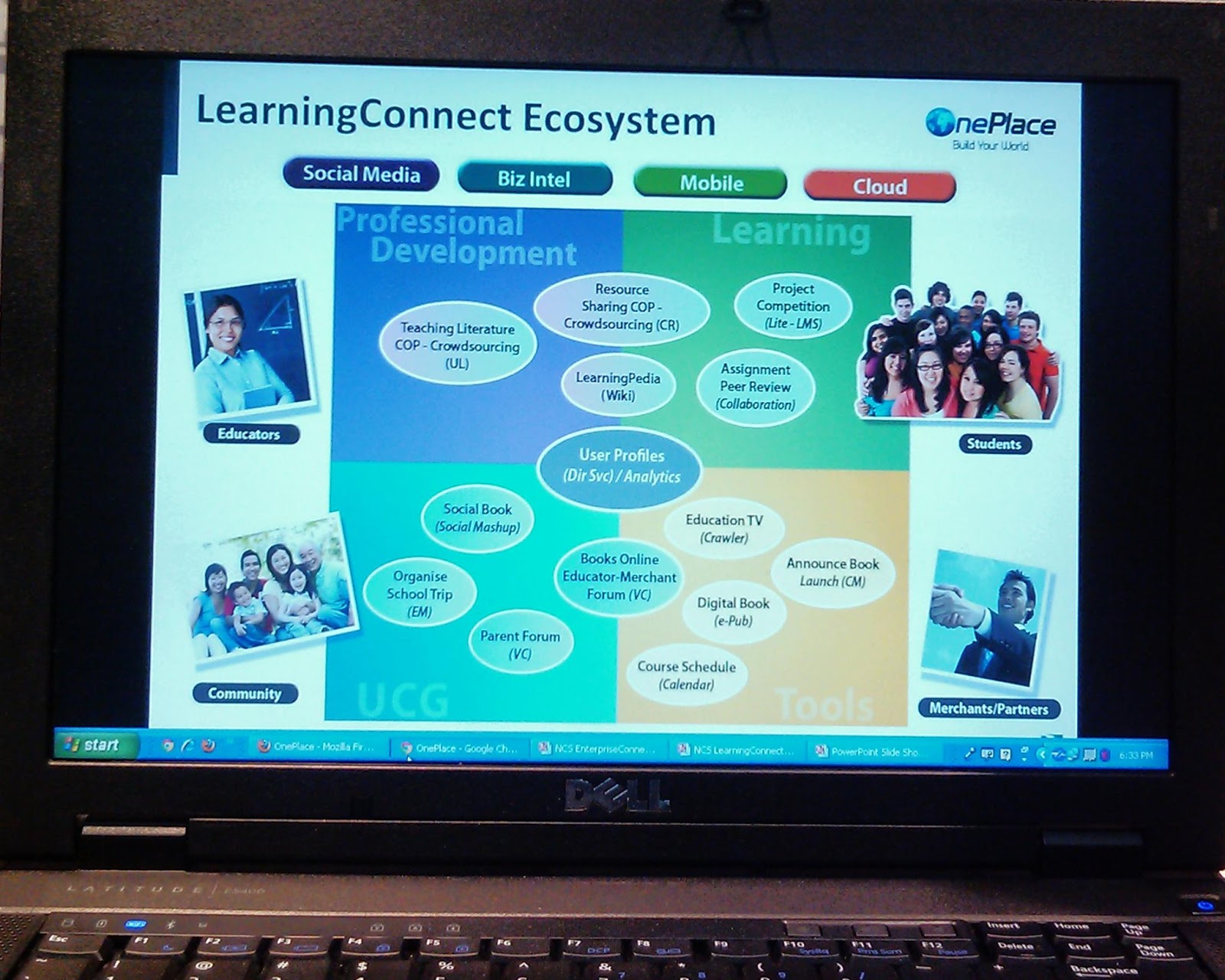
OnePlace is a portal which sits on a public or a private cloud and enables collaboration for both small and medium business through the use of the above technologies. It basically lets organisations use the infrastructure – namely, servers, networks and security which lets these technologies flourish.
 |
| OnePlace portal Singapore – CommunicAsia 2011 |
“OnePlace shows how social media can be used for collaboration, share experiences, engage in peer-to-peer learning with lots of room for creativity,” said Ng See Sing, general manager of NCS Portal City at CommunicAsia 2011. “They are also applicable to healthcare, care for the aged, wealth management and so on.”
NCS is working with the ecosystem – i.e. government agencies, private sector bodies, content providers and magazine publishers. It helps agencies and enterprises to launch portals using its technologies and NCS will also help its customers to deploy them.
“OnePlace is not another Facebook but employs social computing within a social enterprise,” said Ng.
OneCal, short for One Calendar is an intuitive scheduling and alert tool which gives users control over what alerts to receive and how they receive them. It’s accessible on PCs or via any Internet-enabled mobile devices such as smartphones and tablets, and it is able to aggregate the user’s calendar and schedule of activities with important government and private sector alerts from Catalysts’ network of partners.
“In developing OneCal, we looked at activities which influence our lives, such as schedules, meetings to attend, notices of road tax renewal, appointments to attend and so on,” said Ng.
OneCal can be used by the private sector and it can also be added to each individual’s calendar and can also be used with lots of mobile services run by government agencies.
For example, national servicemen who receive a call-up notice must acknowledge it through their mobile device or web browser for the event to be put into the individual’s calendar. It can also be used to issue alerts to attend trade shows and product launches, dinner with friends or provide reminders to book borrowers to return books to the library or those who are late to pay their library fines.
OneCal helps ensure that no appointments are missed, while its social-sharing feature also lets users share the events which matter to them with the people who matter most.
It lets enterprises reach out to their audiences and their network through its social sharing features and marketers to reach out to their customers, It also offers them an analytics service, providing marketers with a deeper understanding of their audience’s preferences and an integrated and cost-effective means to multiply their brand presence and activities.
NCS’ other products include MyTransport.SG which provides a comprehensive range of travel information from Singapore’s Land Transport Authority to both motorists and public transport users on their smartphone or tablet device. Another is ePublishing which enables electronic publishing.
Launched in March 2010 by the Land Transport Authority, MyTransport.Sg is a complementary service to two other portals, ONE MOTORING and PublicTransport@SG.
There could be more companies in Singapore working on the master plan which is driving public cloud usage there. Anyway, Malaysia has its own comprehensive e-government initiatives too, such as Digital Malaysia, various portal-based applications developed by MAMPU (Malaysian Administrative Modernisation Planning Unit) and programmes driven by PEMANDU (Performance Management Delivery Unit) and most are cloud-based.
Annual fixed
Back to AwanHeiTech, cloud payments are all based on operational expenditure charged by usage and number of seats, with monthly variable consumption-based, monthly variable based on seat count, monthly fixed and annual fixed, and over 50% of Malaysian organisations wanted annual fixed subscriptions for every cloud application.
IDC found different workload deployment intentions in different countries across the region and Malaysia’s intent for on-premises private cloud is huge compared to the others. China and Hong Kong favour on-premises legacy, whilst India and the Philippines tend to favour hybrid cloud options.
When choosing a cloud service provider, make sure they have Malaysian experience or you could break your return-on-investment, make sure they will be around up to 15 years down the road, have proven relevant experience and processes. Upfront costs to implement cloud is very high, even in Malaysia and up to 90% of cloud spending is on services, so time to delivery is
“Lastly, cloud does saves money but it isn’t all about cheaper IT, but which processes to move to cloud to be more competitive. Find the right partner and orchestrate early,” Dan concluded.
Digital signage
At the panel discussion which followed, Jack Wang Jun, Vice-President of Maipu Communication Technology, China said that a cloud-based portal is used to control and manage advertisements and notices displayed on digital billboards across the country. The digital cloud also helps government, corporations and private sector companies.
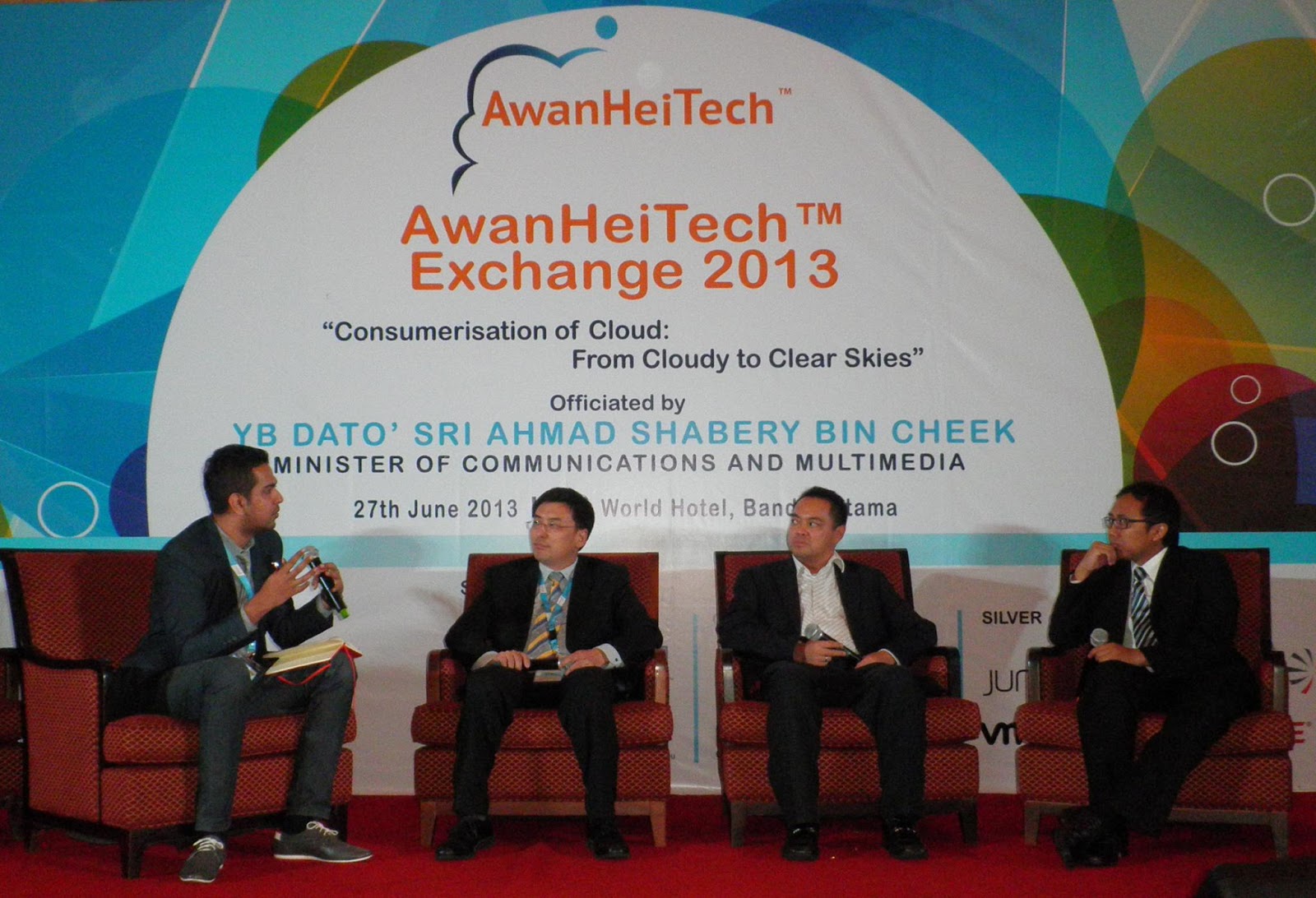 |
| Panel Discussion |
“Thailand is also interested in a government cloud strategy,” said another panellist, Ooi Meng Loong, Technical Consultant, NetApp Malaysia.
Finale
“There’s much talk about implementing cloud in Malaysia but too many legacy applications are not cloud-ready,” said Abdul Halim Md. Lassim, HeiTech Managed Services, Chief Executive Officer. “Cloud adoption by organisations requires much change management and they will have to get used to the idea of hosting their services.”
 |
| Abdul Halim MD Lassim |
It’s parent company, HeiTech Padu also launched its AwanHeiTech cloud computing service that day.
Stay tuned.