Join our community and be part of the conversation.
To subscribe, simply enter your email address on our website or click the subscribe button below. Don't worry, we respect your privacy and won't spam your inbox. Your information is safe with us.
Google brings Elmina data centre online, plans further Malaysian campuses
Expansion in Selangor and Negeri Sembilan will be accompanied by more than 1GW of planned new clean energy capacity, local supplier development and AI skills programmes.
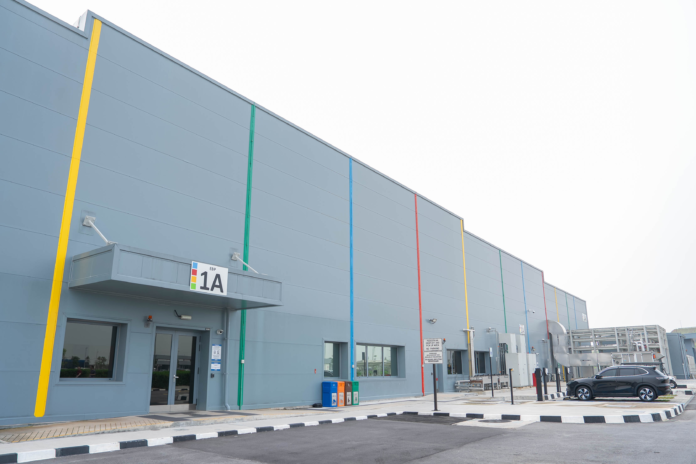
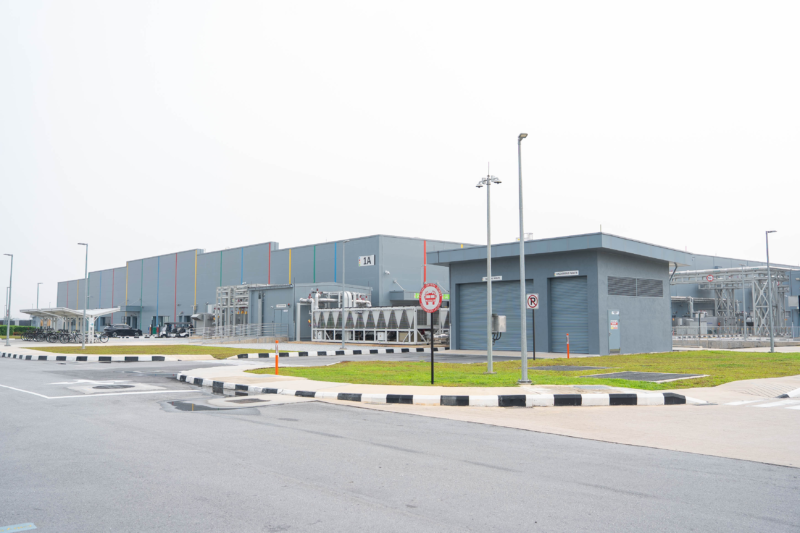
Google’s data centre campus at Elmina Business Park is now operational, with further campuses planned in industrial zones in Selangor and Negeri Sembilan as the company expands the infrastructure supporting its digital and AI services in Malaysia.
Besides meeting the country’s next phase of growth and rising local demand, this infrastructure will provide computing capacity needed to run homegrown applications as well as power Google services across Malaysia and the APAC region.
Google’s first Malaysia data centre at Elmina Business Park
Significantly, this computing capacity will support its upcoming Google Cloud region in Malaysia for enterprise customers.
The announcement presents the expansion as more than a build-out of computing capacity. A sighted Google’s blueprint links its infrastructure investment with the development of Malaysian suppliers, specialist employment and programmes intended to help local communities benefit from digital and AI adoption.
Building a local infrastructure ecosystem
Google says it is working with more than 80 Malaysian entities to develop and operate its infrastructure in the country. These suppliers span construction and civil engineering, network infrastructure, power and cooling components, and services including logistics, legal support, catering and waste management.
The company has established a full local on-site operations team at Elmina Business Park, including data centre technicians, mechanical and electrical engineers, logistics operations managers and physical security managers. It is also recruiting local technical and facilities management talent for its other planned campuses.
Google’s stated approach is to sustain supplier relationships throughout the operational life of its infrastructure, rather than limit local participation to construction. Its blueprint puts the typical operating lifecycle of a Google data centre at more than 20 years, positioning these relationships as a route for suppliers to develop their capabilities and move into higher value work.
Energy commitments alongside computing growth
Energy is a central part of the expansion plan. In addition to adding more than 1GW of new clean energy capacity, Google has existing partnerships with consortiums led by Shizen Energy–Solarvest and TotalEnergies. These take the form of Power Purchase Agreements (PPA) which are long-term purchase agreements to help developers finance and build new generation projects.
Google will also pay for 100-percent of the power its data centre campuses use and the direct infrastructure costs required to connect them to the grid, while complying with all applicable local regulations.
The company gives an expected power usage effectiveness, or PUE, range of 1.12 to 1.14 for warmer tropical climates such as Malaysia, compared with the approximately 1.54 industry average cited in a media briefing before the event.
Connecting infrastructure with AI skills
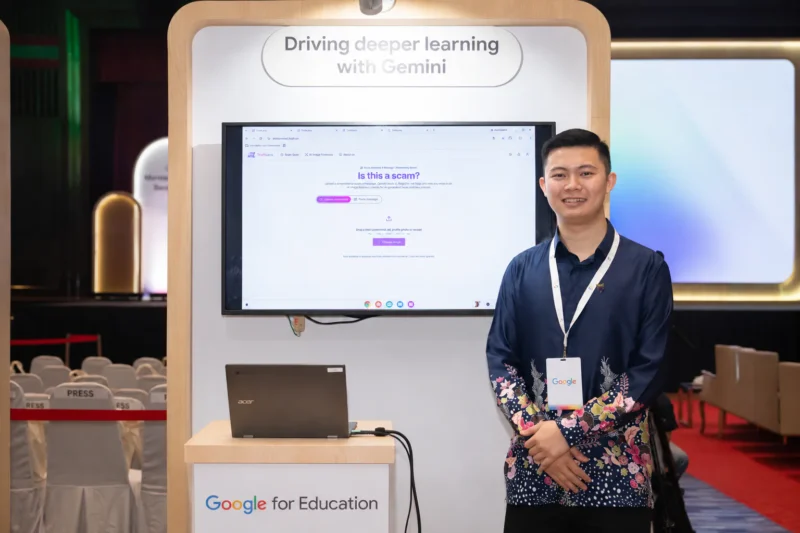
A student showcase by final year Universiti Malaya student, Lai Min Han offered a student-level example of the kind of local innovation that digital infrastructure and AI skills can support.
Lai Min Han
Min Han created Truth Lens, a platform developed as his final year project under the supervision of his university lecturer. It is designed to flag potential scams and AI-generated content, then explain the warning signs in everyday language. For example, it can point out a future date or a misspelled bank name on a receipt, or describe other visual details that suggest an image is AI-generated.
As a student leader in the Google Developer Groups on Campus program, he gained access and exposure to Google communities and technologies, APIs and credits, and learning opportunities that he put to use in building Truth Lens.
He also used Gemini to explore and consolidate feedback, Google SynthID as one of the project’s detection tools, Google Cloud Run to host the platform, and Antigravity, an agentic coding IDE, to help turn ideas into working code.
Announcements
Today, the company announced four new programs aimed at upskilling 800,000 Malaysians over the next five years (2027 to 2031), focusing on educators and youth, microentrepreneurs, civil servants, and vocational jobseekers, starting with communities in the states that host its campuses.
This investment aligns with Malaysia’s development priorities – providing the foundational computing capacity to deliver the upside of innovation across the country while adding local power and water resources as our operations scale.
Ruth Porat
Of the four, the Data Center Institutes (DCIs) program is notable as Google plans to establish DCIs in selected polytechnics in Selangor and Negeri Sembilan starting 2027.
Ruth Porat
It aims to train and place local Technical and Vocational Education and Training (TVET) jobseekers for data centre deployment and operations roles. It will deliver a 10-week curriculum led by industry experts – featuring practical training with a physical data centre simulator provided by Google – to prepare candidates for on-site roles at hyperscale facilities.
Ruth Porat, President and Chief Investment Officer, Alphabet and Google, said, “This investment aligns with Malaysia’s development priorities – providing the foundational computing capacity to deliver the upside of innovation across the country while adding local power and water resources as our operations scale.
At the community level, Google is proud to partner with local suppliers to expand their expertise and to equip workers, students, and entrepreneurs with in-demand skills, enabling Malaysians to capture the new opportunities unlocked by this computing capacity.”