By Cat Yong
Against an ICT industry background of cloud solution providers ‘crawling out of the woodwork’, here’s a thought to ponder upon: cloud technology today is still the domain of IT departments and its system administrators.
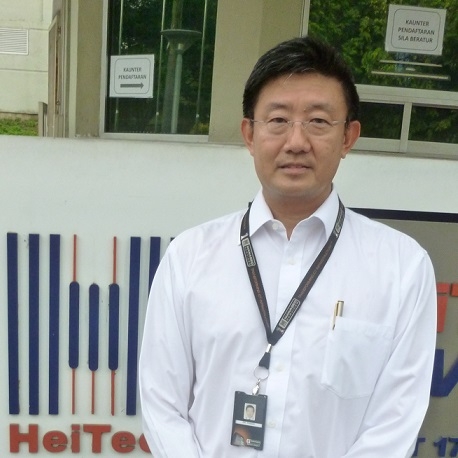
Heitech Managed Services’ Cloud Evangelist, Dr. Chang Cheong Swee explained, “Cloud offered today by a lot of service providers, are not really accessible to the man on the street.” Unless one was an IT practitioner of a few years, it would be hard for one to evaluate the merits of cloud services offered by different cloud service providers.
That’s the driving factor behind why Heitech Managed Services (HMS) together with Heitech Padu (HTP) are organising ‘AwanHeiTech Exchange 2013’, the inaugural premier cloud event. The one-day event aims to demystify cloud technology for their partners, as well as showcase the latest trends and cloud innovations in the industry and by HMS and HTP.
Myth busting
During a pre-event chat, Dr. Chang rightly pointed out a few misperceptions that the event hopes to bust, come June 27th, 2013 at One World Hotel, Bandar Utama.
“What cloud is, is more than just virtualisation of physical hardware, more than transition from hardware-based data centres to virtualised data centres,” he described.
He also gave a timely reminder of what cloud computing had always wanted to achieve, or the main difference cloud had from say, IT outsourcing services.
“The cloud end vision is to provide a different service channel for IT providers and end-users. It is a new service delivery channel with a pay-as-you-use delivery model, scalaility on demand, measurable and with service level agreements (SLAs) in place.”
The case for bundled services
Dr. Chang also opined that real value can be derived from cloud when bundled services are offered, as opposed to just Infrastructure-as-a-Service (IaaS). Acquiring a virtual server in the cloud, for example, doesn’t address later issues of having to upgrade it, maintain it and support it.
“The business would have the exactly the same problem as before. If there are bugs, they would have to call vendors.” This does not help SMEs who usually lack the IT resources to troubleshoot IT problems.
Dr. Chang said, “Consumerisation and Software-as-a-Service or SaaS is basically offering everything in a customised bundle.
“What we are trying to offer is bundled services, where we will offer to virtualise not only your server, but also your desktop.”
With just a subscription, all the apps required to run a business could be on the desktop, set up, pre-configured and offered as a service. This is something HMS is working towards, together with GLCs, and more details would revealed on June 28th.
Other goodies
“The event aims to carry a message beyond what most people are thinking about. We want to give an idea of what cloud is capable of,” said Dr. Chang.
“We set out methodically to address each and every of concern about cloud, because we see these concerns, and being an IT player in the market, we want to address them comprehensively, and in a way that would lead towards this holy grail of cloud computing.”
That means setting right some common misperceptions about cloud.
For example, a lot of cloud adoption actually does not save costs. One of the causes is due to a popular cloud feature and benefit called scaling, that is actually quite misleading.
The idea is that a cloud would be able to scale up or offer increasing amounts of IT resource like capacity or processing power for a virtual machine. But those IT resources are dependent on physical hardware; real physical storage and processors for example; that are allocated to support it.
“A virtualised machine can only be as large as the physical server that it runs on. It can’t scale beyond that, because nothing physical is supporting it.”
Most cloud infrastructure use cheap, commodity servers to be cost efficient. But these servers are hardly suitable for mission critical applications, that have large databases behind it. This is where HMS’ mainframe cloud comes in.
Dr. Chang said, “The mean time before failure (MTBF) or before having to be rebooted because of memory failure, for x86 servers could be two months, but mainframes could last for over 20 years,” said Dr. Chang adding that they have a customer running apps transacting tens upon tens of billions, on mainframe servers.
“That same machine has been chugging away for over 20 years. It’s never been turned off, it’s never been down, it’s never had a problem… they wouldn’t even touch it!”
Legacy apps these days, are also rendered quite useless because of commoditised cloud’s horizontal type of scaling ie. more virtual machines without the physical ‘goods’ to back it up. Most legacy apps today, are not aware or designed to horizontally scale in the cloud, another shortcoming that HMS hopes to address with their mainframe cloud.
Plan for change
Dr. Chang concluded the interview with a few gems of wisdom. “When you go into a cloud program, what we advise is – don’t get locked into a particular technology or vendor. Be as open as you can be. Look into your own business instead of technology, because technology changes ever so fast, but businesses don’t.”
The IT service provider also aims to be a cloud service aggregator, basically consolidating services from multiple cloud providers and offering them on a single channel for customers.
“We are not necessarily tying in ourselves to a particular vendor. And for customers to interface with us, they will get the best, because we are always searching for the best,” Dr. Chang concluded.