Join our community and be part of the conversation.
To subscribe, simply enter your email address on our website or click the subscribe button below. Don't worry, we respect your privacy and won't spam your inbox. Your information is safe with us.
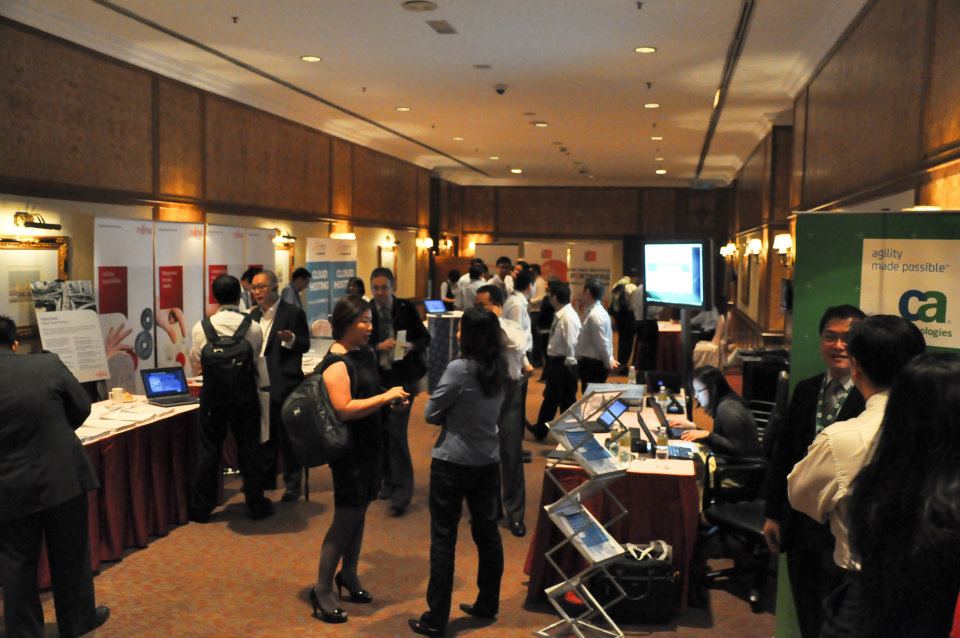
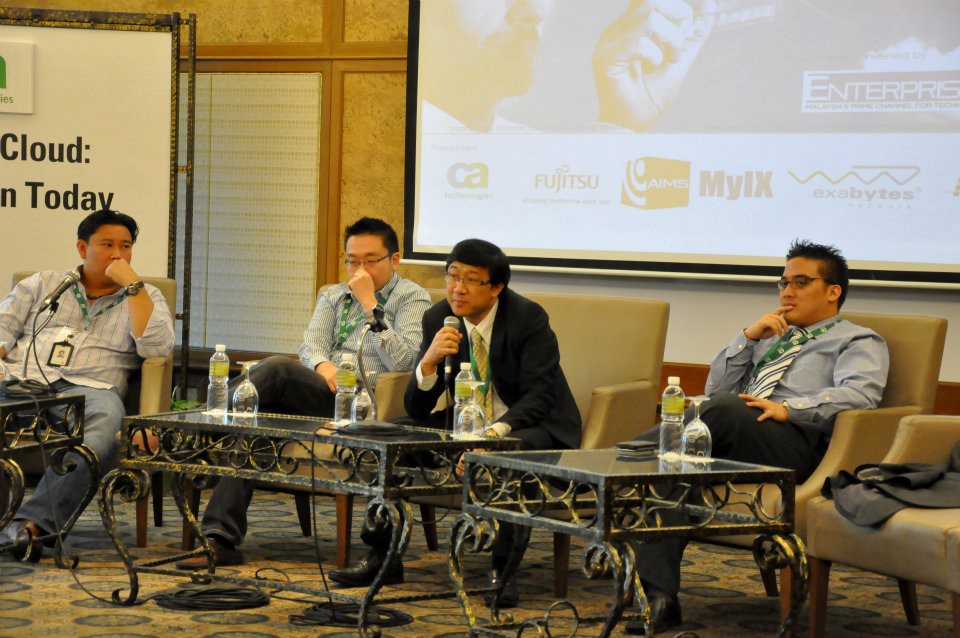
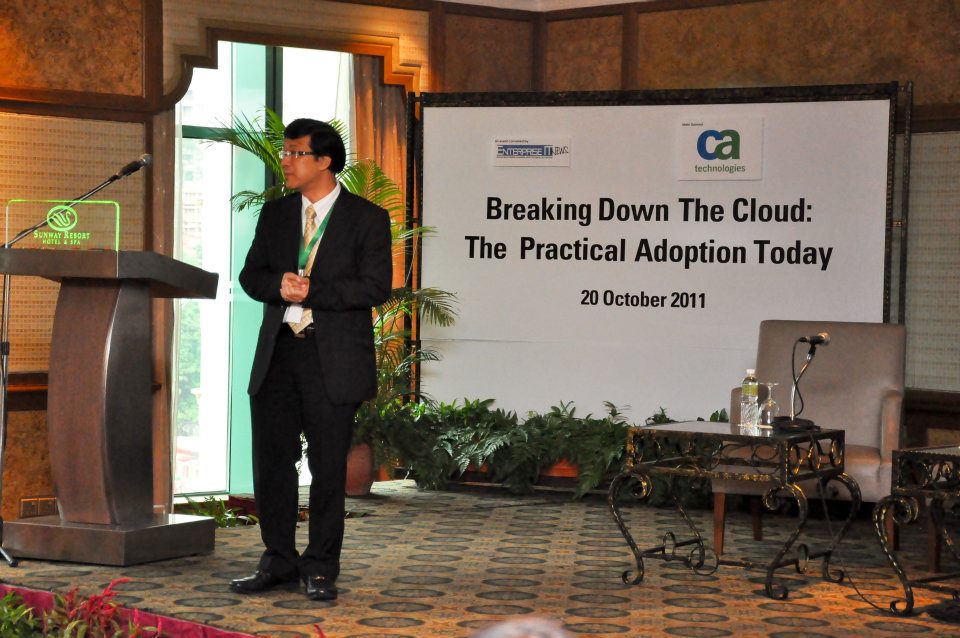
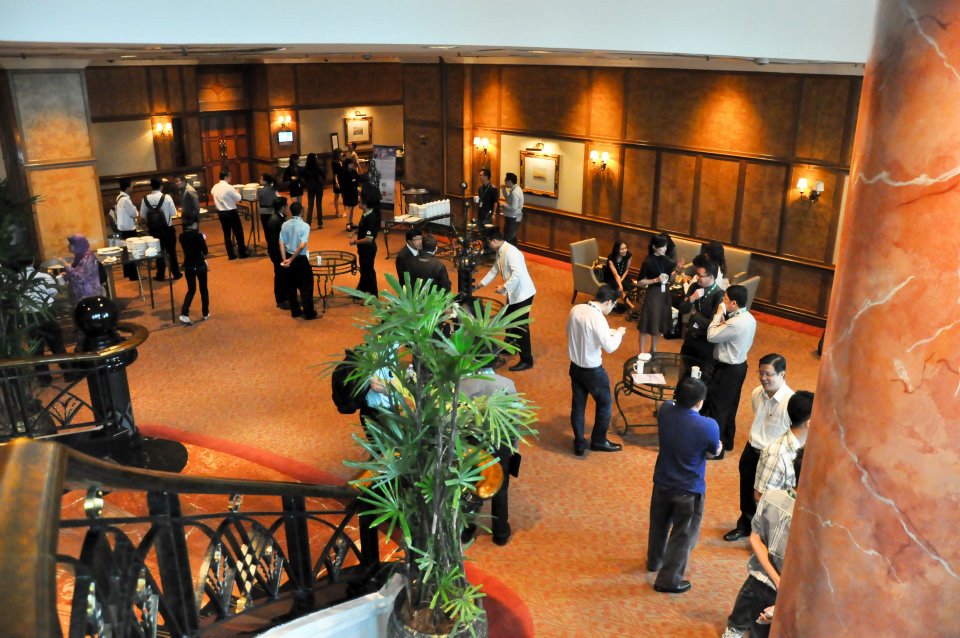
Enterprise IT News (EITN) hosted a cloud computing forum with the theme ‘Breaking Down The Cloud: The Practical Adoption Today’ on 20 October 2011 at Sunway Resort Hotel & Spa, Selangor, Malaysia.
The event started off with welcome notes from co-organizers (Dynatos and PiPR) and followed by the opening address entitled ‘The Era of Now’ by Mr. Karl Verhuist, Vice President, Sales, ASEAN – CA Technologies.
Karl spoke about the significant of Consumerization of IT trend which sparks the convergence of enterprise IT and consumer IT industry due to two catalysts 1.) cloud computing and 2.) mobile devices.
Karl welcomes this trend as a positive one, hinting that enterprises are always looking to achieve more with less and lesser and budget has always been the number one factor in anything to do with enterprise IT. Consumerization of IT actually brings about more business opportunities.
One thing I agree with Karl is that people often forgotten that there is another enabler of cloud computing besides virtualization; that is automation. Automation makes it possible to perform scaling, on demand load balancing and etc.
The second speaker, Mr. Chiew Kok Hin (CEO of AIMS Group) and chairman of Malaysia Internet Exchange (MyIX) stressed on the importance of connectivity. According to Chiew, one has got to figure out how cloud computing is to be deployed and how clouds are to be interconnected, most probably with data centers or with public clouds in data centers around the world and all these boil down to connectivity.
In short, Mr. Chiew reminded us that connectivity is an important cost factor for cloud computing deployment which is very true. Data centers which offer the most affordable and attractive cloud offerings will win more businesses.
The third speaker after coffee break was Mr. Liang Seng Quee, Solution Architect, ASEAN – CA Technologies who evangelized the characteristics of cloud computing. The key message from Mr. Liang was about dynamic service supply chain, which simply means that for a business to achieve agility, one must be susceptible and comfortable with the idea of dynamic supplies, especially on solutions, technologies and services for Enterprise IT. Let me clarify this further. What Mr. Liang was saying is that with cloud computing, enterprises are simply empowered with the option to swap service providers in a manner of plug and play. For instance, one may want to use CRM from salesforce.com and it is also possible to switch to Microsoft Dynamics CRM (with minimum downtown) for other benefits. So, cloud computing actually gives enterprises a lot of options in terms of choosing the right solutions (services) based on budgets, something not so achievable before cloud computing.
According to Mr. Liang, the critical success factors are two things. 1.) changes of mindset and 2.) revise technical strategy and direction for Enterprise IT.
Mr. Wong Weng wah, Vice President, Application Services – Fujitsu Malaysia then shared with audience on human-centric cloud computing.
Fujitsu thinks that AaaS (anything as a service) is a possibility even though may not be practical for all scenarios. Nevertheless, that idea sets out many business opportunities and spurs innovations from Fujitsu. Wong quoted an example which in Japan, agriculture industry actually uses sensors and cameras to monitor farming activities. Information is collected and to be channeled into cloud computing environment for analytics and archived in order to create knowledgebase for agriculture studies. This project is actually funded by the public sectors to archive agriculture’s best practices and to facilitate further research.
After that, Mr. Amer Atet Amer Nordin, Program Manager, iPCloud Services – iPerintis Sdn. Bhd. spoke about how iPerintis has deployed cloud computing infrastructure for Petronas.
iPerintis deployed a cloud infrastructure to replace the conventional infrastructure which was under utilized, cluttered, messy and unable to manage well because there wasn’t proper direction. Cloud computing is actually a good direction and best practice. As a result of that, Petronas is now operating on a consolidated enterprise IT environment that is not only agile, well managed with high visibility, centralized controlled but also cost efficient.
iPerintis aspires to profit such best practices by selling public cloud services to other oil and gas companies worldwide.
Personally, I found most interest from the last speaker Mr. Chan Kee Siak, CEO of Exabytes Network Sdn. Bhd who evangelized cloud for SME industry. He started his message by showing the audience a video on what it is like of cloud computing for SME.
Chan, as he is comfortably known as, thinks that SME should adopt cloud computing at all costs. This is because SME is the industry which needed the most automation yet budget is an issue and suits best the idea of dynamic service supply chain as mentioned earlier. It is much better to subscribe to AaaS for long term basis than to stick with selected solutions which may become obsolete in years to come.
The best quote from the speaker, in my opinion is from Mr. Amer Atet who answered a question from the floor about what system integrators can benefit from cloud computing trend. Amer said that “cloud computing is about (deployment) of the latest and greatest technology” and his idea for system integrators is to go up the value chain by providing more knowledgebase services (as in consulting) than technical base services (as in technical). I truly agree to this because cloud computing actually is going to bring technology cost even lower to end users and it will also forcefully defines survival of the greatest.
In other words, this is an exciting time for end users and challenging time for big vendors and great opportunity time for startups.