Join our community and be part of the conversation.
To subscribe, simply enter your email address on our website or click the subscribe button below. Don't worry, we respect your privacy and won't spam your inbox. Your information is safe with us.
In 2010, Fujitsu Ltd. president Masami Yamamoto saw that cloud computing would be the next big trend in computing, which led the Tokyo-based company to embark on an aggressive cloud strategy across Asia and worldwide.
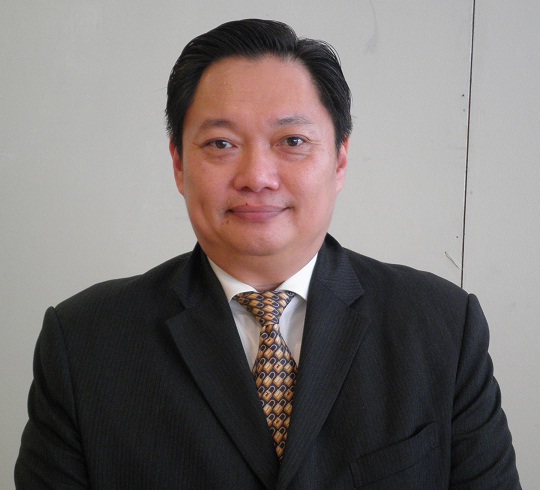
“Right now, the Fujitsu Cloud has over 2,000 customers worldwide, including 800 in ASEAN,” Richard Wern, Fujitsu Asia Pte. Ltd, senior director for Regional Cloud Computing told Enterprise IT News. Most currently are medium-to-large enterprises and government organisations.
In 2011, the company invested US$1.1 billion in public cloud and cloud stack solutions to customers.
The company’s cloud revenue was worth around US$1.6 billion in 2011 and it aims to boost its annual cloud revenue to US$16.4 billion in its 2015 fiscal year, riding on market trends in Asia.
To further boost adoption in ASEAN, Fujitsu embarked on a four-nation Fujitsu Day 2012 roadshow through Indonesia, Malaysia, Thailand and Singapore.
Its one-day stop in Malaysia will be at the Grand Dorsett Subang Hotel on 11 October, with keynote speeches by Gavin Selkirk, Regional CEO, Fujitsu Asia; Justin Wood, Economist Corporate Network, South East Asia who will speak on the current economic outlook; Craig Baty, Chief Technology and Information Officer, ANZ; Richard Wern; Calvin Poong, SAS South Asia regional lead for Information Management and High Performance Analytics; and Minoru Takeno, Head of Corporate Environmental Strategy Unit, Fujitsu Limited.
There will also be plenary sessions by VMware and Symantec, and two breakout session tracks on infrastructure and innovation.
Fujitsu provides customers with private, public or hybrid cloud solutions, while the Fujitsu ServerView Resource Orchestrator utility provides them with self-service functions that enable automatic deployment and operation of virtual platforms, in response to user requests.
Resource Orchestrator lets Fujitsu provision a cloud site in 15 minutes, compared to days or weeks for customers to build a system from hardware and software for a particular purpose such as development, which they use for a period, then sits idle.
It also optimises platform operation, by allowing users to view the usage and status of their specific ICT resources.
Global and local clouds
Fujitsu-based clouds include its Global Cloud Platform and its Local Cloud Platform. Here the terms global and local refer to the functions of the platforms, not geographic reach.
Its Global Cloud Platform is prefabricate in the factory with the same Fujitsu Cloud stack based on Xen, Linux or Windows and are mostly used by customers for hosting their workload.
Fujitsu first deployed its Global Cloud Platform in Japan and subsequently rolled it out to Singapore, Australia, the United Kingdom, Germany and the United States to meet data-residency requirements of certain countries and regions, such as regulations on where banking data is stored.
However, customers worldwide can host on this cloud if they are free of such requirements. These six cloud centres are interconnected by Gigabit-WAN (wide-area network) connections to facilitate global mobility.
Its Local Cloud platforms are mainly based on SAP and VMware and are also used for workload hosting. However, unlike Global Cloud, Local Cloud are customised to meet different market requirements.
Public with SLAs
While public cloud has so far been dismissed for their exposure to security risks, concerns of their performance and uptime, both Fujitsu Global and Local public clouds are Enterprise Trusted Virtual environments with assured resources provision and 99.95% uptime. They were rated at 99.99% uptime by the Uptime Institute. The slight discrepancy is due to the classification of the data centre they reside in.
Fujitsu public cloud hosts customers’ mission-critical applications such as e-commerce, order processing, business intelligence and so on. It employs either its own RISC and x86 compute platforms and its Eternus storage platform as well as Oracle and EMC platforms.
Next fiscal year, Fujitsu will fully leverage on its business solutions services and open up its cloud to all independent software vendors and systems integrators which want to provide their applications as software as a service (SaaS).
For example, Fujitsu now partners with Nimsoft to provide IT management as a service, while Singost, one of its customers provide SAP workload hosting and messaging as a service on Fujitsu’s public cloud.
Fujitsu’s Human-Centric Cloud focuses on vertical industries such as retail, healthcare, agriculture and others.
“For example, we help farmers in Japan determine their soil quality, know when to sow their seeds and when to irrigate their fields for optimum yield,” said Wern. “Our healthcare cloud helps clinics with patient management and more.”
Most of its customers in Malaysia prefer public cloud. Fujitsu currently has about three public cloud customers in Malaysia, mostly manufacturers which use it to host their SAP workloads. Its Fujitsu Day’s partners in Malaysia include SAS, VMware, Symantec, Tata Communications, FalconStor, Trend Micro and Cisco.
However, small-to-medium enterprise (SME) customers are not too interested in cloud services just yet and Wern believes this is because they don’t see the business need just yet, since most are still quite happy using email and spreadsheets.
Cat Yong is Editor-in-Chief of Enterprise IT News, a regional news website which began in Malaysia circa 2011. A common theme in all of her work - opinions, analysis, features and more - is how technology and innovation drives business and outcomes.
A career tech journalist for 22 years, her work has evolved to also encompass narratives of tech powering human potential.