Join our community and be part of the conversation.
To subscribe, simply enter your email address on our website or click the subscribe button below. Don't worry, we respect your privacy and won't spam your inbox. Your information is safe with us.
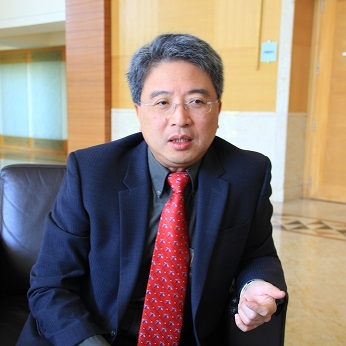
By Andy Khoo, HP Enterprise Sales Group, Country Manager Cloud computing has been a disruptive technology that is changing the way organisations harness IT to ensure continued business success. The benefits that cloud computing brings are multi-fold and businesses looking to remain agile in order to keep innovating on new products and services need to seriously include cloud computing in their business and IT strategies.
Additionally, today’s world requires a hybrid cloud delivery model, sourced across traditional, private and public cloud offerings. To do this, the right strategy is an open, standards based approach, built on a common architecture with unified management and security, which also enables service portability across deployment models. Built on these principles, HP Converged Cloud, the industry’s first hybrid delivery approach and portfolio combines private, managed and public cloud environments with traditional IT infrastructure to deliver a seamless experience. With HP Converged Cloud solutions, clients have the most complete, integrated, open platform that integrates servers, storage, networking, security, and management, enabling organisations to effectively and productively build and manage cloud services. Organisations around the world have leveraged HP’s Converged Cloud solutions to gain agility, speed-to-market and ultimately drive top-line growth. 2013 trends We must always keep in mind the fundamental premise that CIOs are looking for an effective solution to improve delivery of IT to the organisation and improve business agility while simultaneously reducing costs. As such, this becomes a compelling backbone proposition for Telcos to deliver solutions to address that fundamental premise. As we move forward, we shall see the following consistent trend – the initial offering is typically some form of Infrastructure-as-a-Service or IaaS. This takes the form of offerings for Storage-As-A-Service or Backup-As-A-Service or even Disaster Recovery- As-A-Service. Another common offering to start with may be providing Test and Development As A Service. The common unifying theme here is to outsource and off-source simple solutions which provide incremental benefits with relatively low risks to customers. This can be considered the starter or appetiser to whet the appetite of prospective cloud customers. Once the cloud customer is more familiar and comfortable with such services, then the next step for most Telcos and communications service providers (CSPs) is to then offer some form of Software-as-a Service (SaaS) or Application Service Provisioning (ASP) offering. However this scaled up service offering carries greater complexities as this is not just about incremental delivery but about taking over business ownership of delivering mission critical application services to the end-user. Working with Telcos and/or CSPs Firstly, we provide the building block components that enable Telcos to build out their Cloud Stack. These include the necessary hardware (servers, clients), software and networking components which are global market leading technologies in their own right. Secondly, HP provides key integration and consulting services as a value-add to those Telcos who wish to have a true technology partner and not just a supplier of components to work with. In this approach, HP draws on its global service delivery capabilities underpinned by decades of experience in helping clients build world-class data centers and hosting facilities. So, best practices are incorporated into the design and architecture that HP would deploy and deliver for the Telcos as their service delivery partner for building the cloud platform. Last but not least, HP can also become the outsourced or facilities management partner to the Telcos to ensure that the ongoing operations and continuous improvement to their cloud services is carried on in a constant and seamless manner. In this final proposition, HP again draws on its global expertise in running and operating cloud environments for both CSPs andTelcos which enable efficient, cost effective and state-of-the-art centers to deliver 24×7 services to their end-customers. Aggressive Throughout Asia Pacific, we have seen numerous projects where customers and Telcos, which are aggressive, have begun significant cloud efforts. These span the gamut of all industries. The Telcos are also using this period to learn about the right mix of technology, services and partners to package into an offering to their end-customers. Increasingly, Telcos and CSPs have seen that going it alone does not always make the most sense. They may own the facility and the customer relationships, but delivering on Service Level Agreements or SLAs is a complex offering to a corporate customer as compared to the delivery of voice or data to end-consumers say over a cellular service. Expectations, commitments and sometimes even penalties due to the enterprise environment are much more stringent than the typical consumer who has high tolerance for service disruptions over the standard telecommunications network for voice or data. Hence, even as technologies evolve and morph into faster and higher bandwidth offerings, there must be a concomitant packaging of service expectations and obligations in order to attract and retain enterprise customers. These are corporations which have been long-used to prompt and reliable services from their IT vendors and resellers, and the same expectations are applied to their Telcos for cloud services and SLAs. Telcos are now increasingly partnership with IT vendors to meet and deliver on these enterprise expectations and maintain the relationships that are hard-won in the cloud space. Hence we can expect to see more tie-ups in the future as Telcos become more closely partnered to IT vendors and system integrators. Telecommunications Industry CSPs especially stand to enjoy exponential gains from leveraging cloud computing. Offering cloud-based services is becoming an increasingly important business expansion and revenue stream model for CSPs. And with the rapidly increasing adoption of cloud-based services, CSPs need to optimise their network services for cloud-based enterprise applications. To minimise capital requirements and to drive business growth, one of the premier telecommunications service providers in Hong Kong looked to HP to transform their IT environment into a hybrid cloud delivery model designed to align to the organisation’s business needs. HP integrated the HP Monsoon feature into HP’s CSM solution for increased customisation to address the multiple user interface requirements of the CSP. HP Monsoon is a cloud management system that provides clients with an interface and portal to manage cloud services be it public or private. To meet the requirements of the enterprise users, HP Monsoon offers benefits including user management, access control, reporting and analytic tools, corporate account/role management, and policy implementation engine. A satisfied customer was quoted as saying, “From an infrastructure and technical perspective, the most important piece in this project is the end-to-end solution design and implementation from HP. We are impressed with how HP took on the role as a holistic solution architect that oversees the entire project instead of merely selling us the CSM solution in-a-box which will not fit all our business requirements.”
Cat Yong is Editor-in-Chief of Enterprise IT News, a regional news website which began in Malaysia circa 2011. A common theme in all of her work - opinions, analysis, features and more - is how technology and innovation drives business and outcomes.
A career tech journalist for 22 years, her work has evolved to also encompass narratives of tech powering human potential.