By Shavinya Abeywickrema
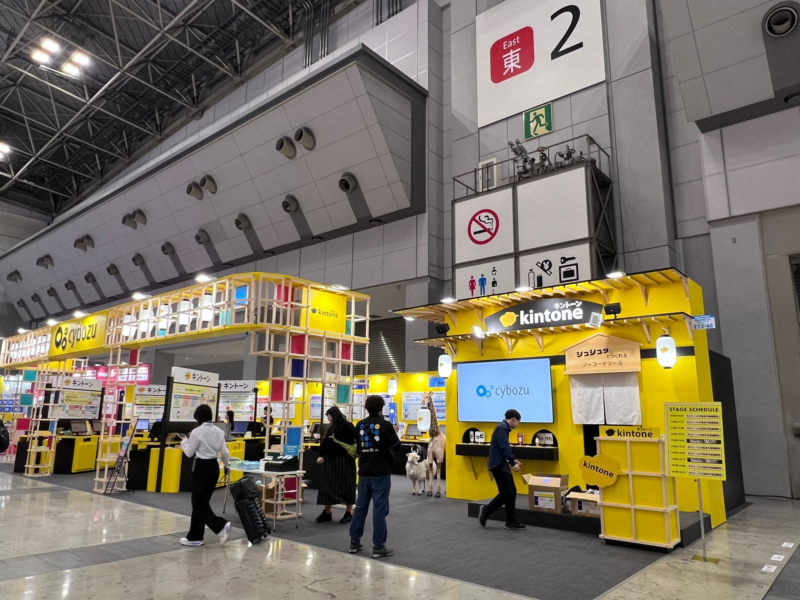
Some events are important by reputation. Others make their significance felt the moment you step onto the show floor. Japan IT Week 2026 was very much the latter. Being on the ground at one of the largest IT conferences in Japan, what stood out immediately was the atmosphere. The energy was high, the conversations were constant, and the quality of engagement across the venue was remarkable.

Over the course of the event, we had the opportunity to speak with a range of industry professionals from Japan and beyond, many of them closely involved in the changing conversations around AI, digital transformation, enterprise operations and customer strategy.
What made this year’s event especially compelling was not simply its size, but the sense of movement behind it. This was not a conference built around abstract promises. Across the exhibition floor, companies were discussing real customer needs, real operational pressures and real use cases. The result was an event that felt commercially grounded and highly relevant to where the enterprise technology market is heading.
That practical tone came through clearly in conversations with exhibitors. When asked about Hammock’s biggest highlight from the event, Hoshi Fuyuki pointed not to scale or visibility, but to the opportunity to engage directly with customers. “I’d say the highlight has been meeting customers with a wide range of challenges. It has also been a learning experience for us,” she said.
That response captured something important about Japan IT Week. It was not only a place to showcase solutions, but also a place to listen. For many exhibitors, the value of the event seemed to lie just as much in hearing what customers are struggling with as in presenting what their own platforms can do. In that sense, the exhibition floor became a live feedback loop – one where companies could better understand the evolving priorities of the market in real time.
AI and digital transformation, unsurprisingly, were among the strongest themes running through the event. When we asked BluStellar NEC Japan (in video above) where they are seeing the most practical impact from AI and DX today, their answer pointed to the breadth of that change. “This is progressing across a wide range of fields,” they said, highlighting areas such as business planning, sales management and broader business operations. More importantly, they noted that “AI-led digital transformation is expanding across many different domains.”
That is a useful observation, because it moves the conversation away from AI as a standalone trend and towards AI as an embedded part of enterprise activity. The most meaningful transformation is often not the loudest. It happens when AI begins to shape routine decisions, internal processes, planning cycles and operational execution. That was one of the clearest impressions from the event: digital transformation in Japan is no longer confined to isolated experiments. It is steadily becoming part of the machinery of business.
At the same time, the event also revealed the pressures companies are facing as this transformation accelerates. In speaking with Japan AI, one of the strongest themes that emerged was the difficulty of keeping pace with change. “One of the biggest challenges is the sheer speed at which AI is evolving,” they said. “We are constantly thinking about how to keep up.”
That challenge is made sharper by the intensity of the wider market. As they explained, major players “are continuously launching new features,” which means companies must think carefully about how to respond and how to differentiate themselves. Their conclusion was especially telling – “The pace of innovation itself is a major challenge.”
That may be one of the most honest summaries of the AI market today. The question is no longer whether companies should engage with AI. The real challenge is how to remain relevant in an environment where capabilities are shifting rapidly, expectations are rising, and the competitive baseline keeps moving. For many organisations, keeping pace is now as important as innovating.
What emerged most clearly from this year’s event was a picture of an enterprise market moving beyond curiosity and into application. AI is no longer sitting on the sidelines as a future-facing concept. It is being folded into planning, sales, operations and management. At the same time, companies are under growing pressure to move faster, position more clearly and deliver more practical value.
From the ground, that was the clearest takeaway of all: Japan’s tech market is not standing still. It is learning, adapting and accelerating in real time.