Join our community and be part of the conversation.
To subscribe, simply enter your email address on our website or click the subscribe button below. Don't worry, we respect your privacy and won't spam your inbox. Your information is safe with us.
Operators in the US have jumped onto the Pokemon Go bandwagon with special offers and promised incentives, although Australian operators seem to be still waiting on the sidelines. While the augmented reality game doesn’t appear to use much data on the network, T-Mobile US and Sprint have figured out at least two ways to leverage the marketing hype to their advantage. T-Mobile US is offering a special promotion under its “T-Mobile Tuesday” incentive scheme that gives its users free, unlimited data for Pokemon Go traffic.
Recognising that users may run out of power due the need to constantly have their phone on during game play, T-Mobile US is also offering specials on battery packs, and additional prizes such as rewards in PokeCoins for in-game purchases, and trips in the US to hunt Pokemons.
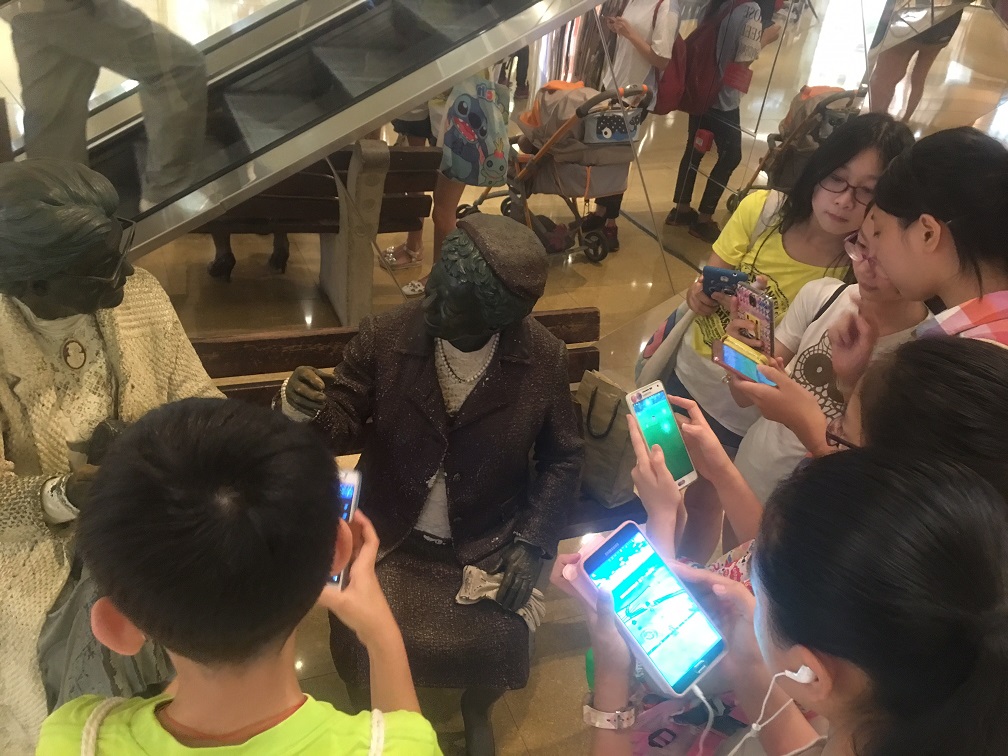
A group of children converging around popular landmarks of a city, to play Pokemon Go.
Another operator looking to capitalise on the game is Sprint, which promises to drop Pokemon “lures” inside its retail stores to attract Pokemons – and hence players – into those locations, along with free charging for player’s devices. Sprint said it will also have Pokemon Go “experts” on hand to coach players and share information such as locations for suppliers and Pokemon training. At this point, Australian mobile operators seem to be taking a ‘wait and see’ attitude.
While Australia’s major mobile network operators acknowledged the popularity of the game for their subscribers, they have yet to roll out game-specific promotions. Telstra said its customers “love” Pokemon Go, and have been snapping up battery packs, but has yet to announce any special offers for players – with the exception of advice that they can enjoy Pokemon Go usage for free over its Telstra Air Wi-Fi hotspot service.
Optus and Vodafone also acknowledged the take up of the game by their users, but pointed out they did not feel the need to create special plans for Pokemon Go players since the game doesn’t use any more data the typical applications. Optus told local media it had yet to register any “spikes” in data usage on its network, while Vodafone said the game was similar to web browsing with a 2GB plan capable of offer some 200 hours of game play.
The assertions from Optus and Vodafone are confirmed by data gathered by network analysis firms. In a study of 100 Pokemon Go players across 3,000 sessions, the game consumed between 5MB to 10MB of data per hour, much less than other over-the-top apps such as Facebook and Youtube.
CHATTINESS: That said, the sheer number of users created by the popularity of the game does impact network operators, noted Procera Networks VP of global marketing Cam Cullen in blog post. After studying the data from a European mobile network with about 2 million subscribers, Cullen found over 7% of the active subscribers were playing the game in the three hours he studied. And while data usage per user was low, the number of simultaneous sessions did impact the network.
“Bandwidth is just one factor on a network. One usage parameter often overlooked is the number of sessions that the application generates, which affects ‘stateful’ network elements (analytics, charging, and security among them), have to deal with ‘chatty’ or ‘noisy’ applications as they consume system resources,” he wrote.
“Pokemon Go is already pretty chatty… although the bandwidth is pretty low for the application (about .1% of the overall traffic) compared to Facebook (which is about 16% of the overall traffic), the session total for Pokemon Go is almost 1% of all sessions on the network.”