

Zscaler, a global player in cybersecurity and zero trust architecture, is making strategic moves to strengthen its presence in Malaysia with the launch of a new data centre that brings the Zscaler Zero Trust Exchange platform closer to users. Speaking with Enterprise IT News, Sanjay Yadave, Zscaler’s regional leader for Greater Asia, detailed the company’s deepening commitment to local markets, with a particular focus on responsiveness to evolving customer demands for data sovereignty, performance, and advanced security.
Malaysia: A core market
“Malaysia, we consider one of our core markets. So Malaysia, Singapore, Seoul, Hong Kong, Taiwan, are probably the five core markets that we focus on, and of course, we’ve got customers in the other countries across the region,” Sanjay shared.
By bringing our infrastructure closer to customers, we can provide a higher performance service… the data centre is local to them, so the latency is much lower, so performance is faster, and we bring more of the services local to Malaysia.
Sanjay Yadave
Zscaler’s new data centre in Malaysia signals more than just physical infrastructure – it’s a major milestone in addressing customer needs for lower latency and compliance with local regulatory requirements.
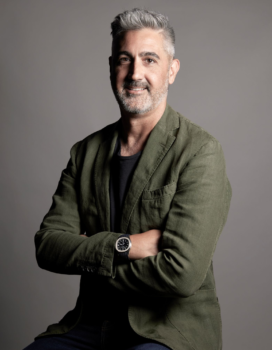
“By bringing our infrastructure closer to customers, we can provide a higher performance service… the data centre is local to them, so the latency is much lower, so performance is faster, and we bring more of the services local to Malaysia,” said Sanjay.
He also cited increasing investment and deployment of more resources: “Since I’ve been at Zscaler about the last 18 months, I see a huge opportunity to expand our business in Malaysia and across the region… Malaysia is one of those focus areas.”
Customer concerns: Sovereignty vs. performance
When asked whether recent infrastructure investments were driven by customer demand, Sanjay was candid: “Customers have been asking whether we’re going to deploy locally here, the one benefit I think Malaysia has had until now is the proximity to Singapore, where we have two data centres, is pretty close.”
This, he pointed out, meant customers in Malaysia were not “suffering too much from a performance perspective.” Aside from providing connectivity, Zscaler having its platform in the country also meant that as “we add in other capabilities, then those features will be available from the data centre as well.”
He elaborated on the growing demand for sovereignty and latency. “What we are seeing an increase on is the interest around disconnected or sovereign cloud deployments… we work with the Department of Defence in the US. There’s various European governments that we’re working with, and now that conversation is expanding out to governments in my region.”
Yet, in most cases, “we have a higher volume of customers in these countries that are requiring higher performance with local services,” underscoring performance as a primary concern for many commercial users.
That being said, he emphasised that Zscaler does not store customer data and can actually provide dedicated infrastructure built solely for specific government agencies so that sovereignty capabilities can expand across more layers. “So for example, it’s a step for us to have a data centre here (in Malaysia).
“It’s not the limit of what we can deploy.”
Zero Trust ambitions: From offices to smart cities across APAC
Zscaler’s data centre ambitions go beyond Malaysia. Sanjay explained, “We’re always looking at where we can expand data centre services… we are seeing increased demand in Thailand and Philippines and Vietnam… So most of the countries in my region where our customers are located have data centre(s) but there are a few that don’t, yet. So, I’m lobbying and asking our global teams if we can continue expanding.”
Something else that Zscaler has been working on is cellular SIM card technology that extends its zero trust capabilities to endpoint or Internet of Things (IoT) devices. There are already successful deployments of IoT, for example litter bins with sensors in Singapore that indicate when bin capacity is full which determines the route of the refuse truck. Also, automated teller machines (ATMs) in remote locations in the Philippines are enabled by satellite-based internet connectivity.
Zscaler’s cellular technology can provide zero-trust security to these devices as long as they support SIM-enabled internet connectivity.
Partner ecosystem: Collaboration for best-of-breed security
Zscaler is also a “partner-first” company, working with a rich network of distributors and technology alliances. “We have a mix of resources from sales, solutions, engineering, customer success. So we want to be able to support customers across the whole life cycle of their engagement with Zscaler, “ Sanjay explained and added, “We have a very extensive partner network, and those partners complement the skills that we have here.”
Besides distributors like Westcon as a partner, Sanjay underscored the value of integration and approaching the market with technology alliance partners which include CrowdStrike, Okta, AWS, Microsoft, Google and more: “We generally advise customers to use the best of breed for each of three layers, rather than going to one vendor who claims they could provide it all.”
The three layers Sanjay meant, is the way that his organisation thinks about security; endpoint posture, identity, and its zero trust exchange platform.
Citing Crowdstrike and Okta as examples, Sanjay highlighted the significance of combining Zscaler’s data with those from an endpoint security provider and an identity verification provider. In essence, Zscaler would be able to more holistically assess security policies, verify a user or an identity, and grant it the right level of access.
Looking ahead
With its Malaysia investment, responsive approach to sovereignty and performance, and its expanding regional efforts, Zscaler seems to be positioning itself as a catalyst for secure digital transformation in Asia. “It’s a significant step, and I’m pleased and proud that we’ve made this investment, because it shows our dedication and focus to the country,” Sanjay concluded.