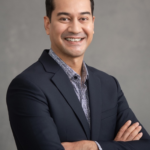
Malaysia is regularly ranked by AT Kearney, as the world’s third outsourcing destination behind India and China, according to UK-based law firm Olswang partner, Ian Ferguson. He shares about Malaysia’s best features and what it would take for her outsourcing industry to go further.
EITN: What in your opinion is the ‘health’ of Malaysia’s outsourcing industry?
Ferguson: Malaysia is well positioned to grow its outsourcing industry. It is already an attractive location for shared services operations for many MNCs either through captives or third party services arrangement, or a combination.
Malaysia has regularly been ranked by AT Kearney as the world’s third outsourcing destination behind India and China.
However, in global terms, the Malaysia outsourcing market is currently comparatively small and immature.
In terms of a service location, it faces competition from India, China, the Philippines and Singapore. But as its competitors face challenges such as increasing costs, Malaysia can become much more competitive because it is politically and economically stable, has good and expanding infrastructure, offers a talented workforce with language skills and a relatively low cost base, and it’s geographic location enables it to service multiple jurisdictions.
In addition, there are significant Malaysian government financial incentives available to encourage companies to establish outsourcing operations in Malaysia.
MDeC recently announced that it wishes to push the country’s outsourcing sector up the value chain towards knowledge process outsourcing (KPO).
There is also a growing number of local service providers looking to challenge the traditional international players.
Outsourcing by Malaysian companies has not been significant compared to the number and value of transactions in Europe and the US. This is partly due to the fact that Malaysia, like other ASEAN countries, has enjoyed material economic growth over the last few years resulting in companies having a greater focus on business expansion rather than cost cutting measures, one of the traditional drivers for outsourcing in the West.
To the extent that Malaysian companies have embarked on outsourcing of functions to third party service providers, the focus has been more on IT services rather than business processes.
Furthermore, potential buyers of outsourcing services may need a better understanding of the benefits (and associated risks) of outsourcing before this part of the outsourcing industry in Malaysia grows further. That being said, there is a growing interest in cloud computing services across the region.
EITN: In your experience, what are the hallmarks of a thriving outsourcing industry?
Ferguson: Apart from a significant number of outsourcing transactions, including a good number of high value deals, an industry that offers genuine competition amongst a broad range of service providers as well as a breadth of IT and business process services.
Also, a country that is not only an attractive destination for outsourced services but also one in which the major local companies are actively engaged in outsourcing their non-core functions.
EITN: What are the outsourcing trends you are seeing in the region? Ie. setting up of cloud data centres? Has outsourcing always involved setting up shop in the form of data centres? What are the popular forms of outsourcing that you have seen?
Ferguson: A number of US and European based companies have in-sourced services or brought them back into their own countries for a variety of reasons including political and economical, and the emergence of low cost centres in those countries.
There is the emerging competition from Eastern European countries and African countries such as South Africa and Morocco, and Latin America including Mexico and Brazil.
Singapore has announced a number of initiatives to create hubs, for example for CIO functions and data management.
Malaysia continues to be a favoured location for data centre operations. The Philippines continues to attract finance and accounting outsourcing services.
The outsourcing of IT services (including data centre operations) is still the dominant type of outsourcing in the region. BPO has been limited.
Internationally, over the last 3 to 4 years there has been an increase in the number of larger cloud computing deals. A good number of outsourcing transactions, especially in IT services, now include some cloud component. The scope of some of these deals include Asia/APAC.
EITN: What are the different options of cloud computing, and it challenges and opportunities? Ie. the risks to data security?
Ferguson: Cloud computing is a model for the delivery of IT services over the Internet, which allows users to store and access data, use software, on remote servers owned or operated by third party service providers.
There are 3 service models, namely:
– Infrastructure as a Service (IaaS) – service provider delivers IT infrastructure e.g. storage space or computing power
– Platform as a Service (PaaS) – service provider provides a computing platform for the user to develop and run its own applications
– Software as a Service (SaaS) – service provider makes available software applications for users.
Service deployment options are as follows public cloud (shared, self-service, pay as you go), private cloud (dedicated hardware environment), hybrid cloud (combination of public and private).
Opportunities/benefits: cloud computing offers on demand, “pay as you go”, flexible, scalable IT services. Customer pays for service as operating expense without significant capital expenditure.
The challenges and key issues to outsourcing in this manner are:
– supplier-centric contracts which provide customers limited contractual protection.
– additional security risks as a result of data being stored in multiple servers in different locations do service providers have adequate security measures in place? Customers should obtain contractual assurances (including a security plan, encryption strategy, system monitoring procedures) from their service provider to ensure the security of their data.
– regulatory constraints on cross border data transfers – there are different jurisdictional approaches and new data protection laws coming into force across ASEAN.
– for customers, data access, recovery and portability is very important. Customers should ensure that they can leave the cloud easily and bring back their data into their organisation or migrate their data to another service provider. They should also insist on a detailed exit plan which includes how their data can be extracted, the format in which that data must be delivered, exit assistance from their service provider and the time in which exit must be completed.
The regulatory constraints in the financial services sectors makes it more difficult for financial institutions to enter into cloud computing arrangements. Regulators are concerned about data security and confidentiality, data recovery and segregation, and their ability to properly supervise and audit regulatory compliance by financial institutions.
EITN: How can the Malaysian market catch-up to established cloud cosmopolitans such as Singapore or Australia?
Ferguson: Apart from addressing regulatory issues which is challenging, cloud service providers should address the contractual concerns that customers have with supplier-centric contractual terms, ensure that their cloud solutions are offered with the highest level of security possible (and potential certified to be so by an independent and respected body), and ensure that customers can access, recover and transfer their data easily.
This would require an industry approach to ensure consistency and the creation of a level playing field for cloud service providers in Malaysia. If they can make their offering contractually and operationally attractive, Malaysian cloud service providers will could increase their business.
Malaysia should accelerate its plans to make the country an even more attractive location from which to provide outsourcing services which would encourage international cloud service providers to expand their operations into Malaysia. Identify what Singapore and Australia do well and ensure that Malaysia does even better.
EITN: What are the top 3 contractual issues associated with cloud migration and cloud-based transactions?
Ferguson: See Question 4. But contractual protections only provide certain comfort for a customer and none at all if the service provider becomes insolvent. It is very important that the customer undertakes adequate due diligence on the service provider, its capabilities and the quality of service offered. It is equally important to address security issues, and data access, recovery and portability, operationally rather than just rely the contractual terms.
EITN: What are the top 3 benefits of negotiating the right outsourcing or vendor deals?
Ferguson: Significant cost reduction, greater operational efficiency and access to innovation. The most successful deals are those where the business and commercial interests of the customer and supplier are aligned and both parties operate in a true spirit of partnership.