By Charles F. Moreira
We’ve already heard a lot about virtualisation of data processing resources such as servers and how they enable organisations to save costs through optimal resource allocation and utilisation, centralised monitoring and management.
Virtualisation also helps ensure security, mirroring and uptime by letting system administrators quite literally “beam” virtual servers Star Trek style between physical hosts in data centres at dispersed locations around the world, so their company’s business functions continue running, despite a physical disruption of a hosting site, such as the nine data centres which went down when Hurricane Sandy hit New York and New Jersey last year.
However, less frequently mentioned are the associated data storage facilities without which any kind of data processing or analysis of big data will not be possible, and storage today is virtualised as well, using storage virtualisation technologies such as NetApp Data ONTAP, an industry-leading, highly scalable and flexible unified storage environment.
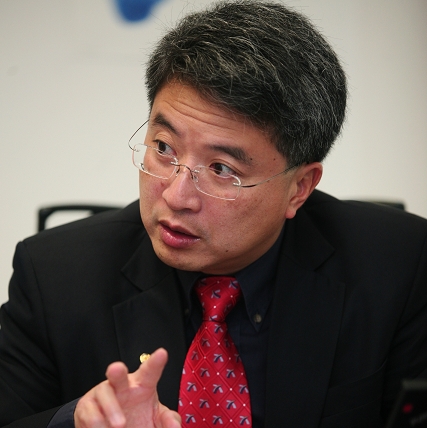
According to Andy Khoo, NetApp country manager for Malaysia and Brunei, the financial services (FSI), telecommunications (telco) and public sectors in Malaysia will be adopting a cautious and conservative outlook for 2013, in light of the ongoing global economic uncertainty, especially in the US and Europe.
Despite the uncertainty and expected reduction in spending, the FSI, telco and public sectors are expected to continue to invest in IT to ensure that it is business as usual, and will continue to drive agility and innovation for the business.
Analysts are bullish about the local FSI sector in general, and it is expected that the banking sector in particular will continue to explore regional opportunities in light of the intense domestic competition, high credit penetration and abundant liquidity.
Adoption of online/Internet banking services continues to grow steadily in line with proliferation of internet-enabled devices such as tablets and smartphones. For example, CIMB is the first in the region (and claims to be first in the world) to offer banking services through Facebook.
Telcos are under pressure to upgrade their existing networks to cope with the increasing bandwidth demands from the rapid adoption of mobile devices that are internet-enabled such as smartphones and tablets. They have already begun to roll out or are conducting pilot trials of their next generation LTE networks to meet demands for high speed and ubiquitous Internet access.
Thee Malaysian government is making steady progress to realise its objective of a high-income and knowledge-driven nation by 2020, and have introduced the Digital Malaysia initiative last year to accelerate that ambition. Among others, various government services are being rationalised and computerised to ensure better delivery to the public.
So common trends seen across the FSI, telco and public sectors are:–
• Growth of data will continue to grow exponentially – hence the need for efficient, scalable and secured storage.
• Growing demand for efficient and cost-effective IT solutions – hence cloud computing will become increasingly relevant and feasible.
For example, IDC foresees a 4,300% increase in worldwide data by 2020.
No major regulatory issues
Thankfully, there are no major regulations governing IT investment in the public and private sector in 2013, though Khoo welcomes the Personal Data Protection (PDP) Act which came into force on 1 January 2013, since it will protect the public’s personal data from being abused for commercial purposes.
“The PDP Act will not greatly impact organisations’ existing IT infrastructure, but organisations must recognise their own policies with regards to the public’s or customers’ personal data so as to not run afoul of the act,” he said.
NetApp’s storage virtualisation technologies at every storage hierarchy level can help organisations in several ways – namely:-
• CIOs today understand that storage virtualisation must underpin any virtualisation initiative to cost effectively eliminate inefficiencies in traditional data centre silo architectures and to drive higher efficiency for enterprises.
• Choosing the right storage platform for a shared infrastructure can mean savings of up to 50 percent in storage power, cooling, space and an overall reduction in data centre costs.
• To achieve these, CIOs must explore innovations such as unified storage architecture, de-duplication of primary data in virtualised environments, thin provisioning, and policy-based automation that NetApp only can offer.
• In short, every virtualisation project must be built atop a solid efficiency foundation to unleash the real benefits of a shared infrastructure. Scalability of the virtualised environment is also important as this allows organizations to provision new capacity to accommodate data growth transparently, without degrading performance or worse, invests in yet more storage boxes.
NetApp has incorporated virtualisation into its product and solutions portfolio in several ways – namely:-
• The NetApp Data ONTAP software environment incorporates storage virtualisation technology that simplifies enterprise data management, while dramatically reducing total cost of ownership (TCO)
• The momentum in data centre virtualisation has increased the focus on virtualisation technologies, which contribute to more effective application provisioning, business continuity, and resource consolidation. But the extent to which virtualisation technology can deliver these benefits depends upon the completeness of the storage-virtualisation solution and how well it is integrated into the core data management architecture.
• Data ONTAP enables a logical presentation of data based on virtual storage pools that are not constrained by physical storage infrastructure, so you can attend to your critical business applications instead of hardware complexity. NetApp provides storage-virtualisation technology at every storage hierarchy level, and this capability is built into all NetApp storage platforms.
To ensure security of virtualised storage, NetApp has taken the following steps:-
• NetApp storage security systems deliver non-disruptive, comprehensive, enterprise-wide data integrity and confidentiality.
• NetApp has partnered with industry leaders to deliver a portfolio of solutions that helps support customers’ multi-pronged approach to data security in the following ways:-
o NetApp Storage Encryption (NSE) provides transparent set-and-forget information protection, including de-duplication and data compression, complemented by NetApp storage efficiency.
o Brocade Encryption Switches and blades (BES) encrypt data at rest on disk and tape in Fibre Channel environments.
o SafeNet StorageSecure in-line encryption appliances support granular encryption at CIFS/NFS share, export, or volume level and compartmentalise shared storage into cryptographic silos.
o SafeNet KeySecure key management appliance manages encryption keys from a single, simplified platform.
o NetApp MultiStore software creates multiple virtual storage systems within one physical system, enabling users to share storage resources without compromising privacy and security.
o Integrated antivirus scanning protects corporate data from malware attacks and computer viruses.

As a storage systems specialist, NetApp has also partnered with related systems and equipment specialists to provide various “as-a-service” solutions to customers through its
Alliance Technology Partner Programme – namely:-
• In 2011, NetApp, Fujitsu and HeiTech Managed Services (HMS) forged an alliance to offer integrated products and services specifically in the areas of virtualisation, storage and data management, and storage services and solutions for the cloud.
• Under this partnership, HMS is appointed as NetApp Malaysia’s first go-to-market partner in the areas of Disaster Recovery as a service (DRaaS) and Storage as a service (StaaS).
• NetApp customers will benefit from Fujitsu’s SAP Infrastructure-as-a-Service (IaaS) which offers SAP customers cost effective infrastructure services at a level of availability that meets their business needs, while ensuring that service levels are met for their mission critical requirements across all aspects of their SAP landscape.
“The storage efficiency foundation in our solutions is based on proven and tested technologies and while small-to-medium businesses (SMBs) want to reduce costs, they also require internationally certified equipment and systems based upon validated technologies, which we provide,” said Khoo.
“Our systems can be scaled upwards by adding more storage devices to each chassis and outwards by adding additional chassis by their side, while they all appear as a single contiguous storage.
“Also, the intelligence built into our storage operating system lets NetApp Data ONTAP handle data de-duplication and compression which increases storage capacity by up to 50%. It also performs snap-cloning and snap-mirroring,while NetApp takes care of multi-tenancy storage by securing each client’s storage against virtualisation risks,” Khoo added.
Aside from the key partnerships with global and local system integrators, an important pillar in NetApp’s go-to-market strategy is the strong partner enablement program which helps channel partners gain the knowledge and understanding to offer consultative selling to customers. NetApp does not sell direct to customers, and it works closely its local channel partners to provide customers a comprehensive on ground support in their journey to embrace today’s technologies.
NetApp’s customers worldwide include Thomson Reuters which combines industry expertise with innovative technology to deliver critical information to leading decision makers in the financial, legal, tax and accounting, scientific, healthcare, science, and media markets.
The European Organisation for Nuclear Research’s (CERN) which uses NetApp solutions to store data generated by its Large Hadron Collider which would otherwise require four million DVDs.
And, the Softbank Group in Japan which offered its internal White Cloud Shared HaaS Standard and White Cloud Google Apps for Business for free and its own White Cloud Desktop service (DaaS) at a discount to affected companies, the government, and nonprofit relief organisations within three days of the earthquake which hit northern Japan in March 2011 with loss of power from the Fukushima nuclear power station.
Softbank also scaled its White Cloud Desktop service to an additional 14,000 internal employees within weeks of the earthquake, thanks to its infrastructure being built on NetApp storage technology.
So thousands of employees were able to work from home, while Softbank surpassed government energy targets, cutting its internal energy costs by 39% in its corporate headquarters and by June that year, over 22,000 virtual desktops were running on Softbank’s cloud, making it one of the largest use cases in the world.