Join our community and be part of the conversation.
To subscribe, simply enter your email address on our website or click the subscribe button below. Don't worry, we respect your privacy and won't spam your inbox. Your information is safe with us.
As businesses look to invest in AI and digital technologies, Rimini Street’s Andrew discusses how organisations can modernise existing ERP systems while managing costs, security risks and long-term technology decisions.
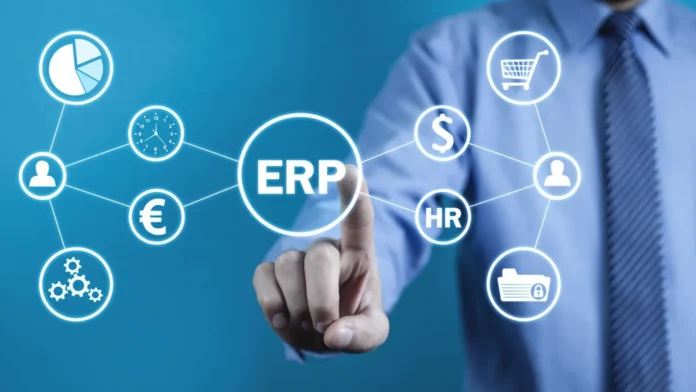
For many organisations, enterprise resource planning (ERP) systems have supported critical business operations for years.
However, with growing interest in artificial intelligence (AI), advanced analytics and cloud technologies, IT leaders face increasing pressure to modernise.
Replacing existing systems can be expensive and disruptive. Yet delaying necessary improvements may also limit an organisation’s ability to adopt new capabilities.
So, how should businesses decide what needs to change and what is still worth keeping?
In an interview with Enterprise IT News, Andrew, GVP and Regional GM for Southeast Asia and Greater China at Rimini Street, shared his views on managing ERP investments, adopting AI and maintaining greater control over enterprise technology decisions.
Andrew Seow, GVP and Regional GM for Southeast Asia and Greater China at Rimini Street
Putting business needs before vendor timelines
Across Malaysia and the wider region, organisations are looking for ways to invest in new technologies while making better use of their existing IT budgets.
For Andrew, the priority is ensuring that technology spending supports business needs rather than following software upgrade schedules.
“We believe technology decisions should be driven by business priorities, not vendor timelines,” he said.
An ERP system that continues to support daily operations effectively may not require immediate replacement.
Instead, organisations can assess whether their current systems meet business requirements and identify where additional investment would make a meaningful difference.
This could allow businesses to direct more resources towards areas such as customer experience, analytics and AI, while determining their own pace of modernisation.
Modernising ERP without replacing existing systems
Modernisation does not always require a complete system overhaul.
Many organisations have spent years developing ERP environments that support their operational processes.
Replacing these systems can involve high costs, lengthy implementation periods and risks to business continuity.
Therefore, Andrew believes organisations should first identify what they want to achieve before deciding which technologies need to change.
For example, improving data integration, introducing better analytics or applying AI to specific workflows may be possible without replacing the underlying ERP platform.
“Knowing what to retain is just as important as knowing what to modernise,” he said.
This approach is particularly relevant as Malaysian organisations pursue digital transformation initiatives, including the country’s AI agenda and MyDIGITAL’s MD2030 Action Plan.
Hence, by focusing on specific improvements, businesses can introduce new capabilities while continuing to use systems that remain effective.
Where AI can make a difference
AI is creating new opportunities to improve how organisations manage enterprise applications and daily IT operations.
Andrew sees near-term potential in using AI to resolve technical issues faster, support decision-making and reduce time spent on repetitive tasks.
He also points to the use of autonomous digital agents and intelligent interfaces alongside existing SAP, Oracle and VMware systems, allowing organisations to introduce AI capabilities without upgrading core application code.
However, he cautions against assuming that every AI application is ready for autonomous operation.
For example, in complex enterprise environments, inaccurate AI outputs can create serious risks, particularly when dealing with financial information, cybersecurity and business-critical processes.
“AI must earn its place by improving outcomes, with human judgement retained wherever context, accountability and risk demand it,” he adds.
Therefore, for CIOs, the focus should be on identifying practical applications, setting clear objectives and measuring whether AI delivers meaningful improvements.
Managing cybersecurity and data sovereignty
Cybersecurity and data sovereignty are also becoming important considerations when organisations evaluate enterprise software support providers.
In Malaysia, the Cyber Security Act 2024 has added to the need for businesses to review how their systems and data are protected.
According to Andrew, organisations are increasingly examining how support providers manage system access, respond to incidents and maintain operational continuity.
Rimini Street is expanding its Malaysian engineering hub towards a 1,000-engineer global capability centre, with the aim of strengthening technical support and regional capabilities across Southeast Asia, according to Andrew
However, Andrew emphasised that having operations within a country does not automatically address every data sovereignty concern.
“A local presence alone does not solve data sovereignty requirements,” he said.
Businesses must also understand where their data is stored, how it is accessed and which legal and contractual requirements apply when working with external technology providers.
Staying in control of technology decisions
Looking ahead over the next 12 to 24 months, Andrew believes organisations will need to pay closer attention to how they manage existing technology investments.
“The biggest differentiator will be how much control organisations retain over their technology choices,” he said.
As per research, for IT leaders, this means understanding the cost of maintaining current systems, recognising where technical debt creates business risks and deciding when further investment is necessary.
ERP modernisation is not simply about replacing older systems with newer technology.
For businesses, the more important decision is identifying which systems continue to deliver value, where improvements are needed and how technology investment can support long-term goals.